
Ever wonder why homemade fermented vegetables at restaurants taste tangy and complex while DIY attempts either mold or taste like nothing? I used to think fermentation required special equipment and science degrees until I discovered this foolproof fermented vegetables recipe. Now my fridge has jars of crunchy, probiotic-rich veggies that last for months, and honestly, the fact that I’m making something this healthy and delicious from just vegetables and salt makes me feel like a fermentation wizard.
Here’s the Thing About This Recipe
What makes this fermented vegetable recipe work is the way salt creates an environment where good bacteria thrive while bad bacteria can’t survive, transforming raw vegetables into tangy, crunchy, probiotic-rich food. Here’s what I’ve learned: most people either use too little salt (which allows bad bacteria to grow) or too much salt (which prevents any fermentation). But when you use the right ratio of salt to vegetables and keep everything submerged in brine, you’re creating actual magic through natural fermentation. It’s honestly that simple—clean vegetables, proper salt ratio, submerged under liquid. No special cultures or fancy equipment needed.
What You’ll Need (And My Shopping Tips)
Good fresh vegetables are essential for successful fermentation. I learned this after trying to ferment sad, wilted cabbage and ending up with mushy, gross results. Look for firm, crisp cabbage with tight leaves, fresh carrots that snap when bent, and daikon radish that’s heavy and firm. According to The Spruce Eats’ guide to fermentation, the fresher your vegetables, the better your fermentation will be.
Sea salt is crucial—don’t use iodized table salt, which can inhibit fermentation and cause weird flavors. Look for sea salt, kosher salt, or pickling salt with no additives. The filtered water should be chlorine-free because chlorine kills the beneficial bacteria you’re trying to cultivate. If your tap water is chlorinated, let it sit uncovered overnight or use bottled spring water.
Fresh garlic and ginger add flavor and have antimicrobial properties that support healthy fermentation. Red pepper flakes add heat and flavor—adjust based on your preference. You’ll also need a clean glass jar (at least quart-sized), a weight to keep vegetables submerged (a smaller jar filled with water works), and a cloth or coffee filter to cover the jar.
Let’s Make This Together
Start with impeccably clean equipment—wash your hands, cutting board, knife, and jar with hot soapy water. You don’t need to sterilize like canning, but everything should be very clean. Slice 1 head of cabbage thinly, julienne 2 large carrots, and thinly slice 1 small daikon radish. Here’s where I used to mess up: I’d cut vegetables too thick and they’d take forever to ferment properly. Aim for pieces about 1/8 to 1/4 inch thick.
In a large bowl, combine your sliced vegetables with 2 cloves of minced garlic and 1 inch of grated ginger. Sprinkle 1-2 tablespoons of sea salt over everything. I use about 1 tablespoon per pound of vegetables—too little won’t preserve properly, too much will make them too salty and inhibit fermentation. Now for the fun part: massage the vegetables with clean hands for 5-10 minutes. This is crucial—you’re breaking down cell walls and drawing out liquid. The vegetables should reduce in volume significantly and release enough liquid to create a brine.
Mix in the red pepper flakes (start with 1 teaspoon if you’re heat-sensitive). Pack the vegetable mixture tightly into your clean glass jar, pressing down firmly to eliminate air pockets. The vegetables should be submerged under their own liquid. If there’s not enough liquid after 10 minutes of massaging, add filtered water to cover completely, leaving about 1-2 inches of space at the top of the jar.
Here’s my secret: place a weight on top of the vegetables to keep them submerged—I use a smaller jar or glass that fits inside the mouth of my fermentation jar, filled with water. Vegetables that float above the brine can develop mold. Cover the jar with a clean cloth, coffee filter, or paper towel secured with a rubber band. You want air circulation but protection from dust and bugs.
Let the jar sit at room temperature (65-75°F is ideal) away from direct sunlight for 3-7 days. Check daily—press down the vegetables to release trapped carbon dioxide bubbles and make sure they stay submerged. You’ll see bubbles forming, which is good—that’s fermentation happening. The brine will get cloudy, also normal. Taste after 3 days—when it reaches your desired tanginess, secure a lid and move to the refrigerator, which slows fermentation dramatically.
This process takes at least 3 days but the hands-on time is only about 20 minutes. Check out my Homemade Sauerkraut for another simple fermentation project using similar techniques.
When Things Go Sideways (And They Will)
Mold appeared on top? The vegetables weren’t fully submerged or your equipment wasn’t clean enough. If you see fuzzy mold (not just white film, which is kahm yeast and harmless), discard the batch and start over. In reality, I’ve learned that keeping vegetables fully submerged is the number one way to prevent mold. This is totally preventable with proper technique.
Nothing is happening after 3 days? Your room is too cold, you used chlorinated water, or too much salt. Don’t panic—give it more time at a warmer spot. Fermentation is slower in cold temperatures. If after 7 days nothing has happened, the batch probably won’t ferment and you should start over.
Vegetables are mushy? You fermented too long or at too high a temperature. This goes from crisp to mushy if you let it go too far. Once they’re mushy, there’s no fix, but they’re still safe to eat if they smell pleasantly sour. Next time, check earlier and refrigerate when they’re still crunchy.
Smells really bad? Good fermentation smells sour and tangy, like sauerkraut. If it smells rotten, putrid, or makes you gag, something went wrong—discard it. Trust your nose. Every successful ferment smells pleasantly funky, not horrible.
When I’m Feeling Creative
Korean-Style Kimchi Vegetables: Add 1-2 tablespoons of Korean red pepper flakes (gochugaru) and 1 tablespoon fish sauce to the mixture. Around winter, this spicy version is my favorite for adding to rice bowls and soups.
Curry-Spiced Fermented Vegetables: Add 1 tablespoon curry powder and 1 teaspoon each of cumin and coriander seeds. When I’m feeling adventurous, these Indian-spiced vegetables are incredible with dal and rice.
Beet and Cabbage Ferment: Replace half the cabbage with julienned raw beets for a gorgeous pink ferment. This has been a total game-changer for making fermented vegetables that look as good as they taste.
Herbed Fermented Vegetables: Add fresh dill, caraway seeds, or bay leaves for different flavor profiles. Fair warning: dried herbs work better than fresh, which can get slimy.
What Makes This Recipe Special
Fermentation is one of humanity’s oldest food preservation methods, dating back thousands of years across cultures worldwide. According to Wikipedia’s guide to fermented foods, lacto-fermentation creates beneficial bacteria (probiotics) that support digestive health while preserving vegetables without refrigeration. The technique of salting vegetables and allowing natural bacteria to convert sugars into lactic acid is the same process used for sauerkraut, kimchi, and pickles across cultures. What sets this fermented vegetables recipe apart is its simplicity and flexibility—you can use whatever vegetables you have, adjust flavors to your preference, and create probiotic-rich food with just salt and time, proving that ancient preservation methods are still relevant and valuable in modern kitchens.
Questions I Always Get
Is it safe to ferment vegetables at home?
Absolutely! Humans have safely fermented vegetables for thousands of years. The salt creates an environment where beneficial lactobacillus bacteria thrive while harmful bacteria can’t survive. As long as you use clean equipment, proper salt ratios, and keep vegetables submerged, it’s very safe. Trust your senses—good ferments smell pleasantly sour, not rotten.
How do I know when the fermented vegetables are done?
Taste them! Fermentation is about personal preference. Some people like mild tanginess (3-4 days), others prefer stronger sour flavor (5-7 days). The vegetables should taste pleasantly sour and still be crunchy. When they reach your preferred taste, refrigerate to slow fermentation.
Can I use different vegetables?
Yes! Cabbage, carrots, radish, beets, turnips, cucumbers, green beans, cauliflower, and peppers all ferment beautifully. Avoid vegetables that are too soft or watery (like tomatoes or zucchini) which can get mushy. Every vegetable ferments at slightly different rates, so experiment.
What’s that white film on top of my ferment?
That’s kahm yeast—it’s harmless but can make ferments taste yeasty. Just skim it off and continue. It forms when vegetables aren’t fully submerged or there’s too much air exposure. It’s not dangerous, just not desirable flavor-wise.
How long do fermented vegetables last?
Properly fermented vegetables stored in the fridge can last 4-6 months or even longer. They’ll continue fermenting slowly in the fridge, getting more sour over time. As long as they smell good and have no mold, they’re safe to eat.
Do I need a special fermentation crock?
No! A regular glass jar works perfectly. Fermentation crocks with airlocks are nice but not necessary. I ferment in mason jars successfully all the time. Just make sure vegetables stay submerged and air can escape.
Before You Head to the Kitchen
I couldn’t resist sharing this because fermented vegetables shouldn’t be intimidating, and this recipe proves you can make probiotic-rich, delicious food at home with just vegetables, salt, and patience. The best kitchen projects are when you’re creating something healthy that improves with time instead of rushing through dinner. You’ve got this—it’s just vegetables, salt, and confidence!
Print
Fermented Vegetables
Description
These homemade fermented vegetables combine cabbage, carrots, and daikon with ginger and garlic for a crunchy, tangy, probiotic-rich condiment that ferments in 3-7 days and keeps for months in the fridge.
Prep Time: 20 minutes | Fermentation Time: 3-7 days | Total Time: 3-7 days | Yield: About 1 quart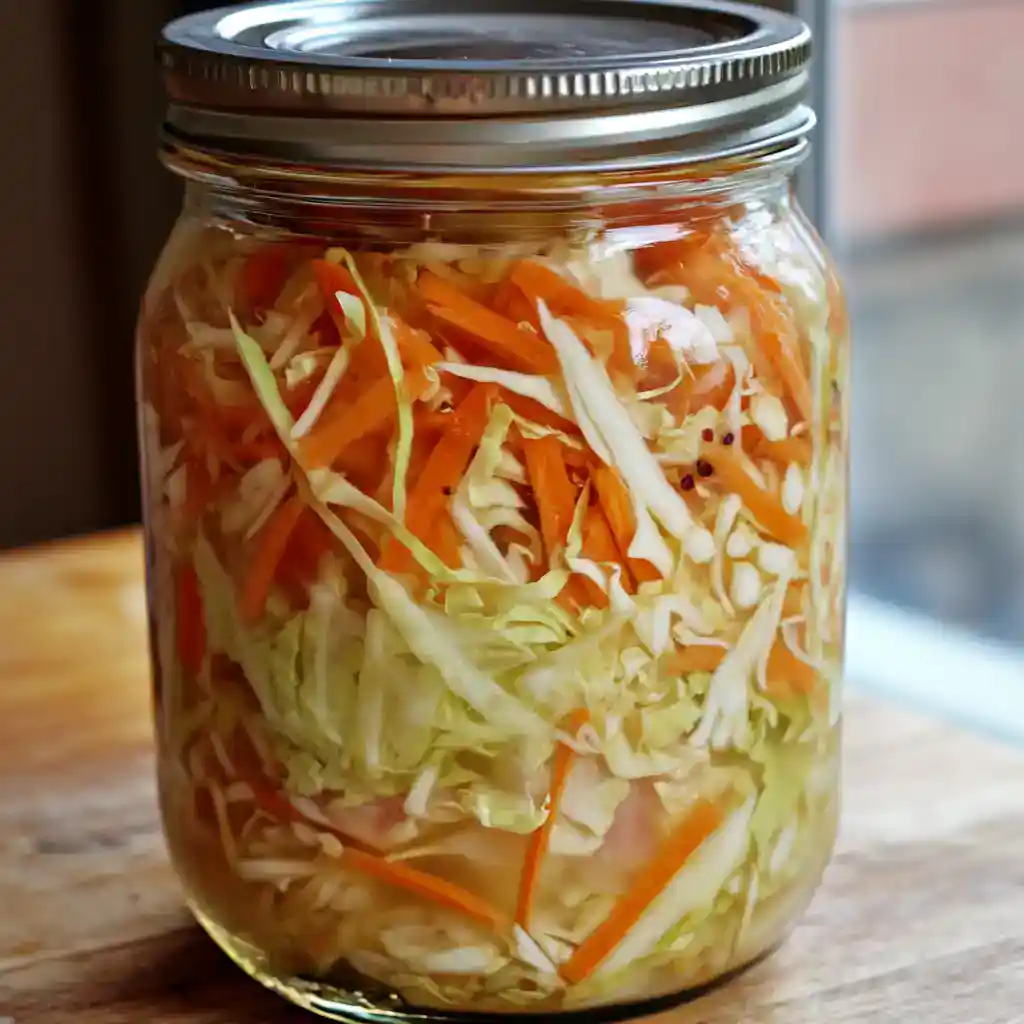
Ingredients
- 1 head cabbage (about 2 lbs), thinly sliced (green or napa both work)
- 2 large carrots, julienned (about 1 cup)
- 1 small daikon radish, thinly sliced (about 1 cup)
- 2 cloves garlic, minced (fresh, not jarred)
- 1-inch piece fresh ginger, grated (about 1 tablespoon)
- 1–2 tablespoons sea salt (not iodized—use 1 tbsp per pound of vegetables)
- 1 teaspoon red pepper flakes (adjust for heat preference)
- Filtered water, if needed (chlorine-free is crucial)
Equipment:
- Large mixing bowl
- Clean glass jar (quart-sized or larger)
- Weight (smaller jar, glass, or fermentation weight)
- Clean cloth or coffee filter
- Rubber band
Instructions
- Wash your hands, cutting board, knife, and jar thoroughly with hot soapy water. Clean equipment is crucial for successful fermentation.
- Thinly slice the cabbage (about 1/8 inch thick), julienne the carrots, and thinly slice the daikon radish. Aim for uniform thickness so everything ferments at the same rate.
- In a large bowl, combine the sliced vegetables with the minced garlic and grated ginger. Toss everything together to distribute evenly.
- Sprinkle the sea salt over the vegetables. Use about 1 tablespoon per pound of vegetables—for this recipe, start with 1.5-2 tablespoons total.
- Massage the vegetables with clean hands for 5-10 minutes. Really work them—squeeze, press, and knead until they release significant liquid and reduce in volume by about half. This is crucial for creating enough brine.
- Mix in the red pepper flakes. Taste the vegetables—they should be pleasantly salty, not overwhelmingly so.
- Pack the vegetable mixture tightly into your clean glass jar, pressing down firmly to eliminate air pockets. Use your fist or a wooden spoon to really compress everything.
- The vegetables should be submerged under their own liquid. If there’s not enough liquid after massaging, add filtered water to cover completely. Leave 1-2 inches of space at the top of the jar.
- Place a weight on top of the vegetables to keep them submerged—use a smaller jar filled with water that fits inside the mouth of your jar, a clean rock, or a fermentation weight.
- Cover the jar with a clean cloth, coffee filter, or paper towel. Secure with a rubber band. You want air circulation but protection from dust and insects.
- Place the jar on a plate (to catch any overflow) at room temperature (65-75°F is ideal), away from direct sunlight. A kitchen counter away from the stove works perfectly.
- Check the vegetables daily. Press down the weight to release trapped carbon dioxide bubbles and ensure vegetables stay submerged. You should see bubbles forming—this is good!
- Start tasting after 3 days. When the vegetables reach your desired level of tanginess and are still crunchy, remove the weight, secure a lid, and transfer to the refrigerator.
- Store in the fridge where they’ll keep for 4-6 months or longer. They’ll continue fermenting slowly, getting more sour over time.
Nutrition Information (Per 1/2 cup serving):
- Calories: 25
- Carbohydrates: 6g
- Protein: 1g
- Fat: 0g
- Fiber: 2g
- Sodium: 580mg
- Vitamin C: 35mg (39% DV)
- Vitamin K: 65mcg (54% DV)
- Probiotics: Live cultures (amount varies)
These fermented vegetables provide excellent probiotics for gut health, vitamin C, vitamin K, and fiber—all while being naturally low-calorie and packed with beneficial bacteria.
Notes:
- Use sea salt or pickling salt, never iodized salt. Iodine inhibits fermentation and causes off flavors.
- Chlorine kills beneficial bacteria. Use filtered, bottled, or tap water that’s been left uncovered overnight.
- Vegetables must stay submerged. This is the #1 rule for preventing mold. Check daily and press down.
- Trust your senses. Good ferments smell pleasantly sour. If it smells rotten or has fuzzy mold, discard and start over.
- Fermentation speed varies with temperature. Warmer = faster, cooler = slower. 65-75°F is ideal.
Storage Tips:
Once fermented to your liking, store in the refrigerator with a tight-fitting lid. Properly fermented vegetables keep for 4-6 months or even longer in the fridge. They’ll continue fermenting slowly, getting more sour over time. Always use clean utensils when removing vegetables from the jar to prevent contamination. If any vegetables float above the brine, push them back down or remove them to prevent mold growth. The fermented vegetables are shelf-stable for weeks at room temperature if kept submerged, but refrigeration preserves texture and flavor best.
Serving Suggestions:
- Side Dish: Serve alongside grilled meats, rice bowls, or eggs for a probiotic boost
- Sandwich Topping: Add to sandwiches, burgers, or tacos for tangy crunch
- Salad Mix: Toss into green salads for extra flavor and gut-friendly bacteria
- Grain Bowls: Top buddha bowls, rice bowls, or quinoa bowls with fermented vegetables
Mix It Up (Recipe Variations):
Korean-Style Kimchi Vegetables: Add 1-2 tablespoons Korean red pepper flakes (gochugaru) and 1 tablespoon fish sauce for a spicy, umami-rich version inspired by kimchi.
Curry-Spiced Fermented Vegetables: Add 1 tablespoon curry powder, 1 teaspoon cumin seeds, and 1 teaspoon coriander seeds for Indian-inspired fermented vegetables.
Beet and Cabbage Ferment: Replace half the cabbage with julienned raw beets for a gorgeous pink ferment with earthy sweetness.
Dill Pickle-Style Ferment: Add 2 tablespoons fresh dill (or 1 tbsp dried), 1 tablespoon mustard seeds, and extra garlic for fermented vegetables that taste like pickles.
What Makes This Recipe Special:
This fermented vegetables recipe honors ancient food preservation traditions practiced across cultures for millennia, from Korean kimchi to German sauerkraut to Indian achar. The lacto-fermentation process not only preserves vegetables without refrigeration but actually increases their nutritional value by creating beneficial probiotics, enzymes, and vitamins. Using just salt and time, you’re harnessing the power of beneficial bacteria to transform simple vegetables into complex, tangy, probiotic-rich food—proving that some of the best recipes don’t require cooking at all, just patience and proper technique.