
Have you ever wondered why sage appears in so many Italian recipes alongside mushrooms, almost like the two ingredients were destined for each other? I cooked with sage only occasionally for years — mostly in stuffing at Thanksgiving — until I threw a generous handful into a mushroom risotto and understood immediately why Italian cooks reach for it constantly. Fresh sage fried briefly in olive oil becomes something almost nutty and intense, and against the earthy mushrooms and creamy Arborio rice, the combination is genuinely extraordinary. This mushroom and sage risotto has become the recipe I make when I want to feel like I really know what I’m doing in the kitchen.
Here’s the Thing About This Recipe
What makes this mushroom and sage risotto work is fresh sage getting added at the very end rather than simmering through the entire cook — stirring it in with the finished mushrooms and Parmesan preserves its aromatic oils and gives the finished dish a brightness that cooked-through sage completely loses. The Arborio rice, toasted properly before any liquid arrives, develops a nutty base that carries the earthy mushroom and herbal sage flavors without competing with them. I learned the hard way that dried sage is a completely inadequate substitute here — fresh is the whole point of this dish.
Gathering Your Ingredients (Don’t Stress!)
Good Arborio rice is worth seeking out specifically — the short, starchy grain is what creates the signature creamy consistency through gradual liquid absorption that no other rice variety can replicate. I learned this after one misguided attempt with long-grain rice that produced something closer to a soggy pilaf than the velvety risotto I was aiming for (happens more than I’d like to admit).
Any combination of mushrooms works beautifully here — cremini bring reliable earthiness, shiitake add genuine umami depth, and a mixed wild mushroom blend makes this feel genuinely special. Sage has been a cornerstone of Italian cooking for centuries, particularly in Northern Italian cuisine where it appears in pasta, risotto, and roasted meats as one of the most important fresh herbs in the culinary tradition — its slightly peppery, almost pine-like aroma intensifies when it hits heat and pairs with mushrooms in a way that feels completely inevitable. Don’t cheap out on the Parmesan — a good wedge grated fresh melts into the risotto far more smoothly than pre-grated canister cheese, which contains anti-caking agents that affect texture noticeably. I always grab extra fresh sage because the temptation to fry a few extra leaves as a crispy garnish is genuinely irresistible and worth giving in to.
The Step-by-Step (It’s Easier Than You Think!)
Start by heating your vegetable broth in a small saucepan over low heat and keeping it warm throughout the entire cooking process — here’s where I used to mess up by letting it sit cold on the back burner. Adding cold broth to hot rice drops the temperature of the pan repeatedly and makes the whole process take significantly longer and cook less evenly.
In a large pan, heat olive oil over medium heat and sauté finely chopped onion and minced garlic until completely translucent and fragrant, about 3-4 minutes. Add the Arborio rice and toast for 2-3 minutes, stirring constantly, until the grains look slightly translucent at the edges and smell faintly nutty — this toasting step builds flavor and helps the rice absorb liquid more evenly throughout the cook.
Now the part that requires attention but genuinely isn’t difficult: ladle in one cup of warm broth and stir continuously until almost fully absorbed. Continue adding broth one ladle at a time, stirring constantly and waiting for absorption before each addition — about 20 minutes total of gentle, meditative stirring until the rice is creamy and cooked al dente.
Meanwhile, in a separate pan with a little olive oil over high heat, cook the sliced mushrooms without crowding until deeply golden — about 5-6 minutes per side. Don’t move them constantly — let them sit undisturbed long enough to develop real caramelization. Stir the golden mushrooms, grated Parmesan, and fresh chopped sage into the finished risotto all at once. Season generously with salt and pepper, let it rest for a few minutes, and serve immediately. If you love Italian-inspired rice dishes like this one, you’d also enjoy this mushroom and thyme risotto for another deeply satisfying variation on this classic technique.
When Things Go Sideways (And They Will)
Risotto turned out gluey and thick rather than flowing and creamy? Add another ladle of warm broth and stir vigorously — it loosens immediately. Risotto always continues thickening off the heat so slightly looser is always better than slightly tighter when you pull it from the stove.
Mushroom and sage risotto tasting flat despite the Parmesan? You almost certainly need more salt — risotto absorbs seasoning throughout the cook and requires bolder adjustment than most dishes. Add gradually, stir, and taste between additions. Mushrooms gray and steamed instead of golden? The pan wasn’t hot enough or they were too crowded — both produce the same disappointing result. High heat and space are everything for properly caramelized mushrooms.
Ways to Mix It Up
When I’m feeling fancy, I’ll fry a few whole sage leaves in hot butter until crispy and place them on top of each bowl as a garnish — they shatter when you eat them and the flavor is intensely concentrated and absolutely stunning. Around the holidays, I’ll finish with a tablespoon of cold butter stirred in right off the heat — the classic Italian mantecatura technique that produces an extraordinarily silky, restaurant-quality texture that makes everyone at the table pause. For a vegan version, skip the Parmesan and stir in two tablespoons of nutritional yeast plus an extra drizzle of good olive oil — genuinely satisfying and surprisingly close to the original. A truffle version adds just a few drops of truffle oil drizzled over each bowl before serving which takes this somewhere truly special with almost no extra effort.
What Makes This Recipe Special
Risotto originated in Northern Italy, particularly in Lombardy and Piedmont where short-grain rice has been cultivated since the 15th century after its introduction through Spanish Aragonese influence on the region — the slow addition of warm liquid technique has remained essentially unchanged for generations because it produces results nothing else can replicate. Italian risotto represents one of the country’s most celebrated and technically refined culinary contributions to world cooking, with the creamy consistency achieved entirely through starch release from the Arborio grain rather than any added cream or thickener. What sets this mushroom and sage version apart from other risotto variations is the decision to add fresh sage at the very end — preserving its aromatic character rather than cooking it into the background where it loses everything that makes it special.
Things People Ask Me About This Recipe
Can I make this mushroom and sage risotto ahead of time?
Risotto is genuinely best eaten immediately — it continues absorbing liquid as it sits and loses that perfect flowing consistency. You can cook it two-thirds of the way through and finish it just before serving, which works well for dinner parties and takes only about 8 minutes to complete.
What type of mushrooms work best here?
Cremini are the reliable workhorse choice. Shiitake add extraordinary umami depth. A wild mushroom mix feels genuinely special. Avoid button mushrooms — their flavor is too mild to stand up to sage and Parmesan. Any single variety or combination works as long as the total weight stays around 8 oz.
Can I use dried sage instead of fresh?
Dried sage produces a noticeably different and considerably less vibrant result here — this is one recipe where fresh genuinely matters. Half a teaspoon of dried works in an absolute pinch but the dish loses much of what makes it distinctive and worth making specifically.
Is this mushroom and sage risotto beginner-friendly?
Very much so — the technique requires patience and attention but no specialized skill. If you can stir consistently and ladle gradually, you can make excellent risotto. The main thing to internalize is that the stirring isn’t optional — it’s the mechanism that creates the creaminess.
How do I store leftover risotto?
Refrigerate in an airtight container for up to 3 days. Reheat in a pan over medium-low with a splash of broth or water, stirring constantly — it comes back beautifully with added liquid. Leftover risotto also makes remarkable arancini if you’re feeling ambitious the next day.
What if my risotto isn’t creamy enough?
Add warm broth a splash at a time and stir vigorously — the creaminess comes from agitating the starch out of the rice, so more stirring and a little more liquid is always the solution. Never add cold broth directly from the fridge.
Before You Head to the Kitchen
I couldn’t resist sharing this because mushroom and sage risotto is one of those dishes that makes you feel genuinely accomplished every single time you make it — the technique builds confidence and the result consistently exceeds expectations. The best risotto nights are when you carry it to the table still moving slightly in the bowl, set it down in front of people who weren’t sure what to expect, and watch their expressions change completely at the first bite.
Print
Mushroom and Sage Risotto
Description
Creamy slowly-stirred Arborio rice finished with golden sautéed mushrooms, fresh sage, and Parmesan — this mushroom and sage risotto is the deeply satisfying Italian classic that rewards patience with extraordinary flavor in every single spoonful.
Prep Time: 10 minutes | Cook Time: 35 minutes | Total Time: 45 minutes | Servings: 4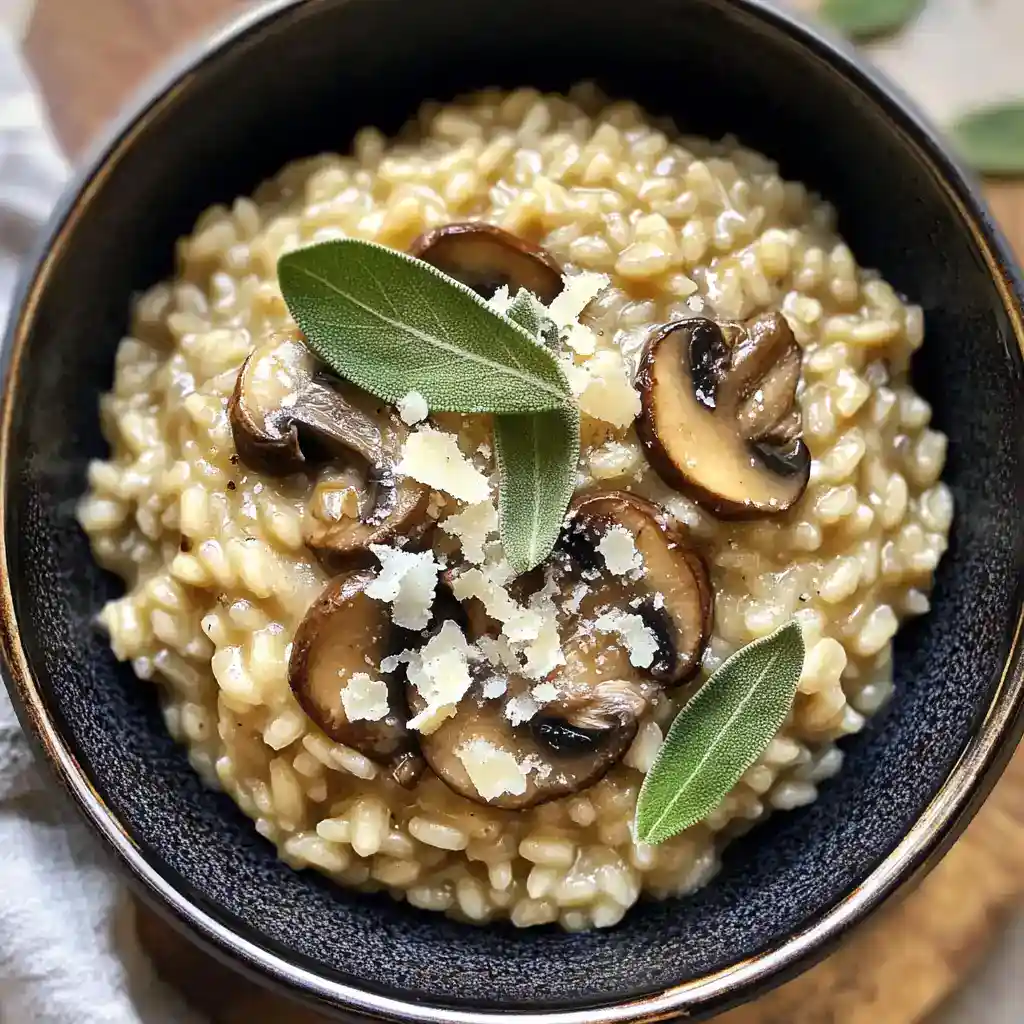
Ingredients
- 1 cup Arborio rice (don’t substitute — the starch content is specific to this grain)
- 4 cups vegetable broth, kept warm throughout cooking
- 8 oz mushrooms, sliced (cremini, shiitake, or a mix — avoid button)
- 2 tbsp olive oil, plus more for the mushrooms
- 1 small onion, finely chopped
- 2 garlic cloves, minced
- 1/2 cup Parmesan cheese, freshly grated from a block
- 2 tbsp fresh sage, chopped (dried is a poor substitute here — fresh matters)
- Salt and pepper, to taste
Instructions
- Heat vegetable broth in a small saucepan over low heat and keep warm throughout — never let it go cold.
- Heat olive oil in a large pan over medium heat. Add finely chopped onion and minced garlic. Sauté until completely translucent and fragrant, about 3-4 minutes.
- Add Arborio rice and toast for 2-3 minutes, stirring constantly, until grains look slightly translucent at the edges and smell faintly nutty.
- Ladle in one cup of warm broth and stir continuously until almost fully absorbed. Continue adding broth one ladle at a time, stirring constantly and waiting for absorption before each addition — about 20 minutes total until rice is creamy and al dente.
- Meanwhile, in a separate pan over high heat with a little olive oil, cook sliced mushrooms without crowding until deeply golden, about 5-6 minutes. Let them sit undisturbed between stirs.
- Stir golden mushrooms, grated Parmesan, and fresh chopped sage into the finished risotto all at once. Season generously with salt and pepper.
- Remove from heat, rest for 2-3 minutes, and serve immediately in warmed bowls.
Nutrition Information (Per Serving):
- Calories: 345
- Carbohydrates: 47g
- Protein: 11g
- Fat: 12g
- Fiber: 3g
- Sodium: 710mg
- Key vitamins/minerals: Calcium (18% DV from Parmesan), Vitamin D (12% DV from mushrooms), B vitamins (significant from both rice and mushrooms), Iron (10% DV)
- Note: Mushrooms are one of the few non-animal sources of vitamin D, and fresh sage contributes meaningful antioxidant compounds — making this a more nutritionally interesting dish than its simple ingredient list suggests.
Notes:
- Keep broth warm at all times — cold broth added to hot rice drops the temperature and disrupts the cooking process significantly
- Cook mushrooms separately at high heat — adding them to the risotto pan produces steamed, gray mushrooms instead of golden, caramelized ones
- Add fresh sage at the very end — it loses its aromatic character completely if cooked into the risotto rather than stirred in at the finish
Storage Tips:
- Refrigerate in an airtight container for up to 3 days
- Reheat in a pan over medium-low with a splash of broth, stirring constantly until the right consistency returns
- Do not freeze — texture becomes gluey and loses the creaminess that makes risotto worth eating
Serving Suggestions:
- Serve immediately in warmed bowls — risotto waits for no one
- Garnish with crispy fried sage leaves for a stunning visual and concentrated flavor contrast
- Pair with a simple arugula salad dressed with lemon and olive oil to cut through the richness
- A glass of dry white wine alongside complements the earthy mushroom and sage flavors beautifully
Mix It Up (Recipe Variations):
- Crispy Sage Garnish: Fry whole sage leaves in hot butter for 30-45 seconds until crispy and place on top of each bowl — they shatter when eaten and deliver an intensely concentrated sage flavor that’s genuinely extraordinary
- Butter Finish: Stir a tablespoon of cold butter in right off the heat for the classic Italian mantecatura technique — produces an extraordinarily silky, restaurant-quality texture
- Vegan Version: Skip the Parmesan and stir in two tablespoons of nutritional yeast plus an extra drizzle of good olive oil — genuinely satisfying and surprisingly close to the original
What Makes This Recipe Special: Adding the fresh sage at the very end of cooking rather than simmering it through the risotto is the decision that makes this dish genuinely special — heat destroys sage’s aromatic oils quickly, and stirring it in with the mushrooms and Parmesan just before serving preserves that distinctive peppery, almost pine-like fragrance that makes the combination with earthy mushrooms so extraordinary. Toasting the Arborio rice before any liquid is added builds a nutty flavor foundation that carries through every stage of the 20-minute cook and gives the finished risotto a depth that skipping this step simply cannot produce.