
Have you ever stood in the produce section staring at a strange, alien-looking vegetable and genuinely had no idea what to do with it? That was me and kohlrabi for years — those pale green bulbs with stems shooting out in every direction looked more like a science experiment than something meant for a stew pot. Then I peeled one, diced it, and dropped it into a long-simmered beef broth, and discovered that kohlrabi becomes something genuinely remarkable under low, patient heat — tender, slightly sweet, with a mild flavor that sits somewhere between turnip and broccoli stem. If kohlrabi has been a mystery vegetable in your kitchen, this beef and kohlrabi stew is exactly where to start.
Here’s the Thing About This Recipe
What makes this beef and kohlrabi stew work is kohlrabi holding its structure through the long simmer far better than most root vegetables — it becomes completely tender without dissolving into the broth, giving every bowl a satisfying, distinct bite alongside the falling-apart beef. Its mild, slightly sweet flavor absorbs the thyme-paprika broth beautifully without asserting itself too strongly, making it a perfect supporting player that makes the whole pot taste more interesting. I learned the hard way that peeling kohlrabi thoroughly past the fibrous outer layer is non-negotiable — leaving any of that tough skin produces chewy, unpleasant pieces no amount of simmering fixes.
Gathering Your Ingredients (Don’t Stress!)
Good kohlrabi is worth selecting carefully at the store — look for firm, medium-sized bulbs without cracks or soft spots, and avoid very large ones which develop a woody, fibrous texture similar to oversized radishes. I learned this after one batch with enormous kohlrabi that stayed slightly tough and bitter even after the full two-hour simmer (happens more than I’d like to admit).
Don’t cheap out on the beef stew meat — well-marbled chuck cut into even pieces from a butcher braises more consistently than the pre-packaged supermarket version where fat content varies wildly between pieces. Kohlrabi has been cultivated across Central and Northern Europe since the 16th century and remains a staple vegetable in German, Austrian, and Eastern European cooking where its versatility in both raw and cooked preparations has been understood and celebrated for generations. Good beef broth carries enormous responsibility in a simple stew like this — a quality version produces a noticeably richer, more developed result that makes the difference between a memorable bowl and a forgettable one. I always grab an extra carrot because the sweetness they contribute alongside the kohlrabi creates a balance that makes the broth taste more rounded and complete.
The Step-by-Step (It’s Easier Than You Think!)
Start by heating olive oil in a large pot over medium-high heat until shimmering. Here’s where I used to mess up — I’d add all the beef at once and end up with a crowded pot full of steaming gray pieces instead of golden, caramelized ones that build the flavor foundation for everything that follows. Don’t be me. Brown the beef stew meat in batches, giving each piece real contact with the hot surface until deeply golden on all sides — about 8-10 minutes total. Those caramelized edges are what makes this beef and kohlrabi stew taste like it simmered all day rather than a couple of hours.
Add chopped onion and minced garlic directly to the pot with all those flavorful drippings. Sauté until the onion is fragrant and beginning to soften, about 3-4 minutes, scraping up any golden bits from the bottom — those belong in the broth. Stir in the diced kohlrabi, sliced carrots, and chopped celery and cook for a few minutes to slightly warm the vegetables before the liquid arrives.
Pour in the beef broth and add dried thyme, paprika, salt, and pepper. Stir everything together and bring to a boil, then reduce heat to low, cover, and simmer for 1.5-2 hours until the beef is completely tender and the kohlrabi yields easily to a fork. Check at the 1.5 hour mark — the broth should be deeply colored and fragrant and the beef should be approaching fall-apart territory. If you love slow-simmered stews built around underrated vegetables like this, you’d also enjoy this beef and radish stew for another deeply satisfying bowl that features an unexpected produce aisle find at its absolute best.
If This Happens, Don’t Panic
Kohlrabi still firm after the full simmer time? It was likely cut too large or the heat ran too low — give it another 20 minutes with the lid off and slightly higher heat. A fork should slide through cleanly when it’s properly done.
Beef and kohlrabi stew tasting thin or flat? You probably need more salt — long-simmered stews absorb seasoning throughout the cook and require confident final adjustment. Add gradually, stir between each addition, and taste as you go. A pinch more paprika stirred in and simmered for 5 more minutes also pulls the broth together remarkably quickly. Beef still tough past the two-hour mark? Keep going — chuck needs its collagen to fully break down and toughness always means more time rather than anything went wrong.
Ways to Mix It Up
When I’m feeling fancy, I’ll stir a tablespoon of tomato paste in with the onions before adding the broth — it deepens the color beautifully and adds a richness that makes people ask what’s different about this batch. Around the holidays, I’ll add a diced parsnip alongside the kohlrabi for extra sweetness and a more complex root vegetable depth that feels appropriately festive and seasonal. For a heartier version, stir in a cup of cooked white beans during the last 30 minutes of simmering — they absorb the flavored broth and add plant-based protein that makes the stew feel genuinely substantial. A gluten-free version is already built right into this recipe as written.
What Makes This Recipe Special
Kohlrabi’s place in German and Central European stew cooking reflects a long tradition of making the most of vegetables that store well through cold winters and develop better flavor after frost — a practical agricultural wisdom that produced some of the most satisfying cold-weather cooking in European culinary history. Kohlrabi belongs to the same plant family as cabbage, broccoli, and Brussels sprouts, and shares their distinctive mild sweetness when cooked properly while offering a firmer texture that holds up in braises and stews better than most of its brassica relatives. What sets this beef and kohlrabi stew apart from standard beef and root vegetable dishes is the kohlrabi’s unique textural contribution — it provides a distinct, satisfying bite that makes every spoonful feel more varied and interesting than a one-note root vegetable stew.
Things People Ask Me About This Recipe
Can I make this beef and kohlrabi stew ahead of time?
Absolutely — this is one of those dishes that genuinely improves overnight as the flavors deepen and the kohlrabi absorbs more of the spiced broth. Make it completely ahead, refrigerate, and reheat gently on the stovetop the next day. It’s arguably better on day two.
What if I’ve never cooked with kohlrabi before?
Peel it thoroughly past the fibrous outer layer until you reach the pale, smooth interior — more aggressively than you’d peel a potato. Then dice it like any firm root vegetable. Taste a raw piece so you understand where it starts, then taste it again after the long simmer and appreciate the transformation completely.
Can I freeze this homemade stew?
Yes — it freezes well for up to 3 months. The kohlrabi softens slightly further after thawing but holds its shape better than most vegetables through the freezing process. Cool completely, portion into airtight containers, and thaw overnight in the fridge before reheating gently on the stovetop.
Is this beef and kohlrabi stew beginner-friendly?
Very much so — the technique is simple and the long simmer is genuinely forgiving. The only step requiring real attention is properly browning the beef at the beginning, and that’s simply a matter of patience and working in batches rather than crowding the pot.
How do I store leftover stew?
Refrigerate in an airtight container for up to 4 days — the flavor improves noticeably after the first night. Reheat on the stovetop over medium-low heat with a splash of broth if it’s thickened overnight, which it often does as the vegetables continue absorbing liquid.
Can I make this in a slow cooker?
Definitely. Brown the beef in a separate pan first — the flavor difference is real and worth the extra pan even for slow cooker recipes — then add everything to the slow cooker and cook on low for 8-9 hours or high for 5-6 hours. Add the kohlrabi with the other vegetables from the beginning since the slower heat won’t overcook it the way stovetop high heat might.
Before You Head to the Kitchen
I couldn’t resist sharing this because beef and kohlrabi stew is exactly the kind of recipe that turns a vegetable you’ve been ignoring into one you start looking for every time you visit the produce section. The best stew nights with this one are when you pull off the lid after two hours, see that deeply colored, fragrant broth, and realize that taking a chance on a strange-looking vegetable was absolutely the right decision.
Print
Beef and Kohlrabi Stew
Description
Tender slow-braised beef with sweet, firm kohlrabi, carrots, and celery in a rich thyme-paprika broth — this beef and kohlrabi stew is the deeply satisfying cold-weather bowl that introduces one of the most underrated vegetables in the produce section at its absolute best.
Prep Time: 20 minutes | Cook Time: 2 hours | Total Time: 2 hours 20 minutes | Servings: 4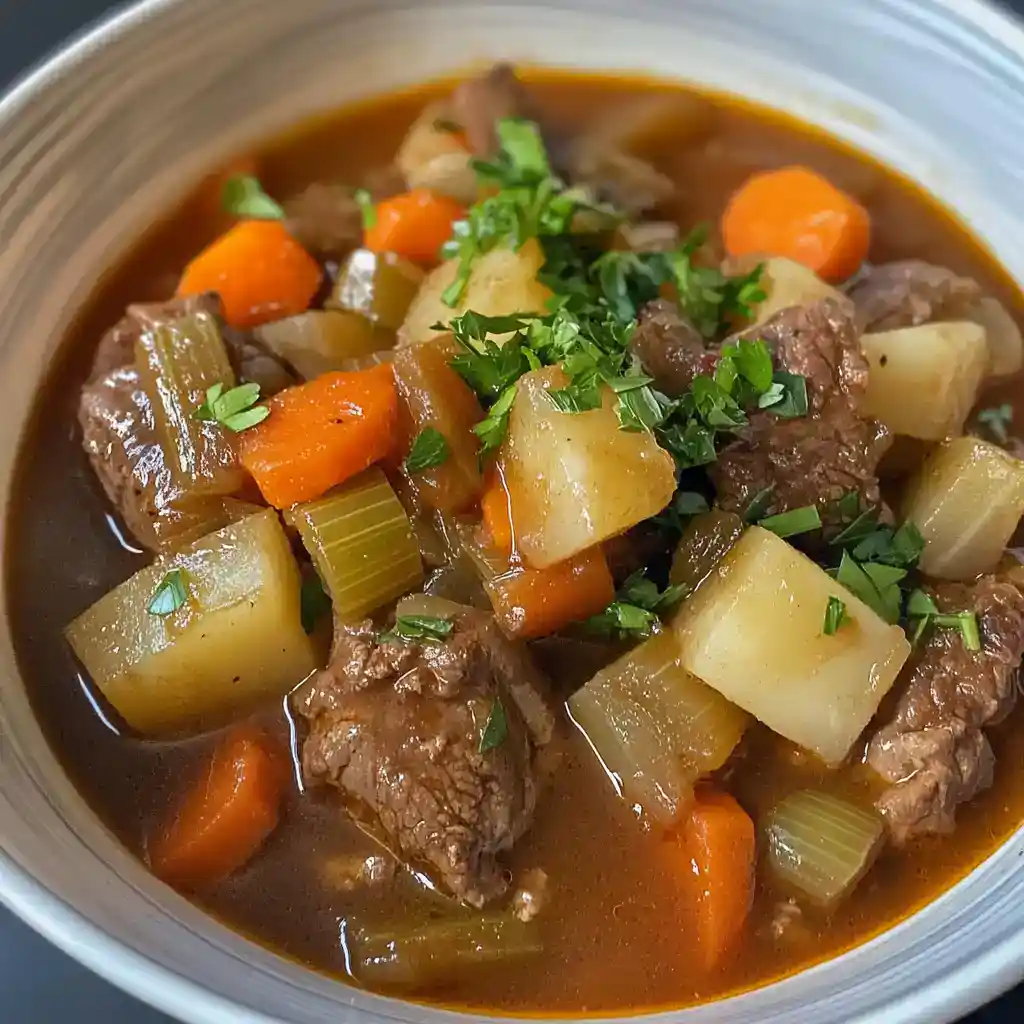
Ingredients
- 1 lb beef stew meat, cubed (well-marbled chuck from a butcher for best results)
- 2 kohlrabi bulbs, peeled thoroughly and diced (peel past the fibrous outer layer)
- 1 onion, chopped
- 2 carrots, sliced
- 2 celery stalks, chopped
- 3 garlic cloves, minced
- 4 cups beef broth (good quality — it’s the backbone of the whole dish)
- 1 tsp dried thyme
- 1/2 tsp paprika
- Salt and pepper, to taste
- 2 tbsp olive oil
- Fresh parsley, for garnish
Instructions
- Heat olive oil in a large pot over medium-high heat until shimmering. Brown beef in batches — never crowd the pot — until deeply golden and caramelized on all sides, about 8-10 minutes total.
- Add chopped onion and minced garlic to the pot. Sauté until fragrant and beginning to soften, about 3-4 minutes, scraping up any golden bits from the bottom.
- Stir in diced kohlrabi, sliced carrots, and chopped celery. Cook for a few minutes to slightly warm the vegetables before the liquid goes in.
- Pour in beef broth and add dried thyme, paprika, salt, and pepper. Stir to combine and bring to a boil.
- Reduce heat to low, cover, and simmer for 1.5-2 hours until beef is completely tender and kohlrabi yields easily to a fork.
- Taste and adjust seasoning confidently before serving — long-simmered stews need bold final seasoning.
- Ladle into bowls and garnish generously with fresh parsley.
Nutrition Information (Per Serving):
- Calories: 340
- Carbohydrates: 18g
- Protein: 30g
- Fat: 15g
- Fiber: 5g
- Sodium: 830mg
- Key vitamins/minerals: Vitamin C (85% DV from kohlrabi), Vitamin A (50% DV from carrots), Iron (20% DV), Potassium (22% DV)
- Note: Kohlrabi provides exceptional vitamin C content — more per serving than many citrus fruits — making this a genuinely nutritious stew that goes well beyond basic comfort food.
Notes:
- Peel kohlrabi aggressively past the fibrous outer layer — leaving any tough skin produces chewy pieces that no amount of simmering fixes
- Brown beef in batches no matter how tempting it is to add everything at once — this single step determines the depth of the finished broth
- Choose medium kohlrabi over large — very large bulbs develop a woody, fibrous interior that stays tough
Storage Tips:
- Refrigerate in an airtight container for up to 4 days — flavor improves significantly overnight
- Freeze in portions for up to 3 months — kohlrabi holds its shape better than most vegetables after thawing
- Reheat on the stovetop over medium-low heat with a splash of broth to restore consistency
Serving Suggestions:
- Serve with crusty bread for soaking up the rich, paprika-seasoned broth
- Ladle over egg noodles or mashed potatoes for a heartier, more substantial meal
- Pair with a simple green salad for balance and freshness alongside the rich stew
- Finish each bowl with a drizzle of good olive oil and extra cracked black pepper at the table
Mix It Up (Recipe Variations):
- Tomato Paste Version: Stir a tablespoon of tomato paste in with the onions before adding broth for a deeper color and more concentrated, richly developed sauce
- Parsnip Addition: Add one diced parsnip alongside the kohlrabi for extra natural sweetness and a more complex root vegetable depth that works beautifully through fall and winter
- White Bean Heartiness: Stir a cup of drained white beans in during the last 30 minutes for extra plant-based protein and a naturally creamy texture that makes the stew considerably more substantial
What Makes This Recipe Special: Kohlrabi’s firm cellular structure holds up through the long braise in a way that softer vegetables simply can’t manage — it becomes completely tender and deeply flavored without dissolving into the broth, giving every spoonful a distinct, satisfying bite that makes the finished stew feel more varied and interesting than a standard root vegetable version. Browning the beef thoroughly in batches before building the stew ensures the broth has genuine depth and complexity from the very first ladle, which is what separates a memorable beef and kohlrabi stew from a pot of boiled meat and vegetables.