
Does your experience with lima beans begin and end with pushing them around a plate as a kid, convinced they were the least exciting vegetable in existence? Mine absolutely does. I avoided cooking with them for most of my adult life based entirely on a childhood grudge that I now realize was completely misplaced. Then a particularly cold February weekend sent me digging through the pantry for something warming and substantial, and a bag of dried lima beans was the most promising thing I found. This vegetarian lima bean soup came out of that desperate Sunday afternoon experiment and it has genuinely changed how I think about dried beans entirely. My husband, who considers himself a committed meat-at-every-meal person, asked if there was enough left for lunch the next day before dinner was even finished.
Here’s the Thing About This Recipe
What makes this vegetarian lima bean soup so satisfying — especially for people who think a soup without meat can’t possibly be filling — is the partial blending technique that transforms the broth into something thick, creamy, and deeply substantial while keeping plenty of whole beans throughout for real texture in every spoonful. You get the best of both worlds in a single pot without adding any cream or thickener whatsoever — just beans doing what beans do best when given enough time and the right aromatics to work with. The bay leaves and thyme do quiet, important work in the background throughout the long simmer, building a herbal depth in the broth that makes the whole soup taste like it has considerably more going on than the ingredient list suggests. I learned the hard way that skipping the simmer time and trying to rush dried beans produces something chalky and disappointing — this soup genuinely needs those 1.5 to 2 hours and rewards every minute of patience.
What You’ll Need (And My Shopping Tips)
Good dried lima beans are worth seeking out rather than grabbing whatever dusty bag has been sitting on the grocery store shelf since who knows when — fresher dried beans cook more evenly and have a creamier, more pleasant texture than beans that have been sitting around for years. Don’t cheap out on your vegetable broth either — eight cups of flat, flavorless broth means eight cups of flat, flavorless soup, and the beans have nothing to absorb and amplify if the broth isn’t giving them anything to work with. I learned this after using the bargain store-brand broth twice and wondering why my bean soup always tasted vaguely hollow despite hours of simmering (happens more than I’d like to admit). Check the dried beans before they go into the pot — pick through them quickly and remove any small stones or shriveled beans that snuck through the packaging process. Rinse them well under cold water and they’re ready to go without soaking, which is one of the genuinely freeing things about this recipe — no overnight planning required. Fresh parsley for garnish is worth having on hand rather than dried — a generous handful of fresh herbs scattered over each bowl right before serving makes the whole soup look and taste considerably more finished and vibrant. I always grab a little extra because I use it generously and don’t like running short at the serving stage. Here’s the full lineup:
- 16 oz dried lima beans
- 8 cups vegetable broth
- 1 onion, diced
- 2 carrots, diced
- 2 celery stalks, diced
- 3 garlic cloves, minced
- 1 tsp dried thyme
- 1 tsp dried oregano
- Salt and pepper, to taste
- 2 bay leaves
- Fresh parsley, for garnish
Let’s Make This Together
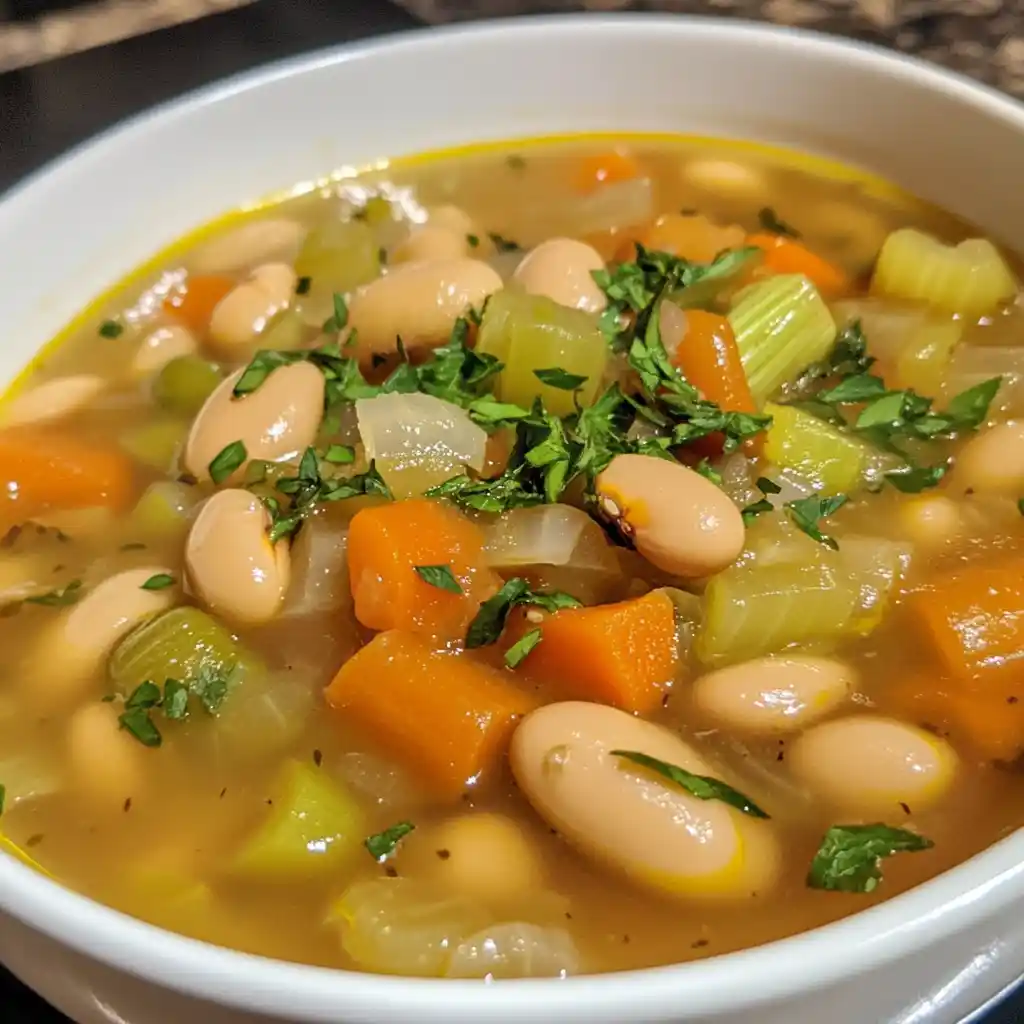
Start by rinsing your dried lima beans thoroughly under cold running water, picking through them quickly for any small stones or damaged beans. Here’s where I used to overthink things completely — I’d read about soaking dried beans overnight and convince myself the recipe couldn’t work without that step and then either delay making it or give up entirely. Don’t be me. This soup works beautifully without soaking as long as you give the simmer time the respect it deserves. Add the rinsed beans, vegetable broth, diced onion, carrots, celery, minced garlic, thyme, oregano, salt, pepper, and both bay leaves to a large pot all at once. Here’s my secret — season the broth more generously than you think you need to at this stage because dried beans absorb a remarkable amount of salt during cooking and the soup will taste significantly more muted by the end than it does right now. Give everything a good stir to combine and bring the pot to a boil over medium-high heat. Then drop the heat to low, cover the pot, and let it simmer for 1.5 to 2 hours. If you love hearty, deeply satisfying plant-based soups like this one, my Chicken and Barley Grass Stew is another warming one-pot recipe worth keeping in your regular weeknight dinner lineup. Check the beans at the 90-minute mark by pressing one against the side of the pot with a spoon — if it crushes easily and the inside is creamy rather than chalky, you’re ready for the next step. Remove and discard both bay leaves. Now use an immersion blender to blend about a third of the soup directly in the pot — enough to create a thick, creamy base while leaving the majority of the beans whole for texture throughout every bowl. Don’t have an immersion blender? Carefully ladle about two cups of soup into a regular blender, blend until smooth, and stir it back into the pot. Taste and adjust seasoning one final time, then serve immediately with fresh parsley scattered generously over each bowl.
When Things Go Sideways (And They Will)
Beans still chalky and firm after 2 hours? They need more time — older dried beans can take considerably longer than fresher ones and there’s nothing to do but keep simmering with the lid on. Some batches legitimately need 2.5 hours and that’s completely normal. Soup too thick after blending? Stir in an extra cup of warm broth until it reaches the consistency you want — this vegetarian lima bean soup is very forgiving about adjustments at the finish. Soup tasting flat even after seasoning? Dried beans are salt sponges and this almost always just needs more salt than you think is reasonable — season gradually, taste after each addition, and trust the process. Broth looking too thin before blending? Make sure you blend a generous portion — the starch released from the blended beans is what creates all that natural body and thickness.
When I’m Feeling Creative
Smoky Lima Bean Soup — Add a teaspoon of smoked paprika and half a teaspoon of cumin with the thyme and oregano. The smokiness that develops through the long simmer is absolutely extraordinary and makes this feel like a completely different and equally wonderful soup. Lemon and Herb Version — Stir in the juice and zest of one lemon right before serving and add a handful of fresh dill alongside the parsley. The brightness completely transforms the bowl and is my personal favorite variation on a spring evening when I want something warming but not heavy. Tomato Lima Bean Soup — Add a can of diced tomatoes with the broth at the beginning. The slight acidity and depth it adds to the bean soup through two hours of simmering is genuinely remarkable and worth trying at least once. Spicy Version — Add a pinch of red pepper flakes and a diced jalapeño with the aromatics. The heat builds slowly through the long simmer and adds a gentle warmth to every bowl that is particularly wonderful on the coldest nights of the year.
Why This Works So Well
Lima beans — also known as butter beans in many parts of the world — have been cultivated as a food crop for thousands of years, with origins tracing back to the Andes region of South America where they were a dietary staple of indigenous cultures long before European contact. According to Wikipedia’s entry on lima beans, they are now grown across tropical and subtropical regions worldwide and remain an important protein source across South America, Africa, and parts of Asia and Europe. What makes this vegetarian lima bean soup so nutritionally impressive is the way dried lima beans provide a complete meal’s worth of plant protein, fiber, and complex carbohydrates in a single bowl — the kind of genuine sustenance that keeps everyone at the table full and satisfied for hours rather than reaching for a snack an hour later. The partial blending technique is what makes this particular recipe stand apart from every other bean soup you’ve tried.
Things People Ask Me About This Recipe
Can I make this vegetarian lima bean soup ahead of time? This is one of those soups that tastes dramatically better the next day — the beans continue to absorb the herbal broth overnight and the flavors deepen and meld in a way that makes the reheated version noticeably more satisfying than the freshly made one. Make it up to 3 days ahead and refrigerate in a sealed container, reheating gently on the stovetop with a splash of broth to loosen it back up.
Do I really need to soak the dried beans first? For this recipe, no — the long 1.5 to 2 hour simmer time does the work that soaking would otherwise do. If you want to soak them overnight anyway to reduce cooking time, go ahead — soaked beans typically cook in about 45-60 minutes instead, which can be useful on a busy weeknight when you’ve planned ahead.
Can I use canned lima beans instead of dried? You can — use two 15-ounce cans, drained and rinsed, and reduce the simmering time to about 25-30 minutes since the beans are already fully cooked. The flavor of the broth won’t be quite as deep since the beans haven’t had hours to release their starch into the liquid, but the soup is still very good and considerably faster on a weeknight.
Is this vegetarian lima bean soup beginner-friendly? Completely. If you can dice vegetables and operate a stove, you can make this soup from start to finish without any difficulty. The immersion blender step is the only technique that might feel new, and it takes about 30 seconds to figure out on the first try.
How long does leftover soup keep in the fridge? Up to 4 days in a sealed airtight container. The soup thickens considerably as it sits in the fridge — just add a generous splash of broth or water when reheating on the stovetop over low heat and stir until it loosens back to the right consistency.
Can I freeze this soup? Yes — this soup freezes beautifully for up to 3 months. The texture holds up really well after freezing and thawing, which is not always the case with bean soups. Freeze in individual portions for easy weeknight reheating straight from the freezer.
One Last Thing
I couldn’t resist sharing this recipe because lima beans have spent decades unfairly maligned as the most boring legume in the pantry and this soup is the definitive argument against that reputation. The best vegetarian lima bean soup evenings in our house end with empty bowls, someone asking what was actually in it, and genuine surprise when I explain how simple the ingredient list actually is. You’ve got this — go rinse those beans.
Print
Vegetarian Lima Bean Soup
Description
A rich, deeply satisfying vegetarian lima bean soup built on eight cups of herbed vegetable broth with tender whole beans and a partially blended base that creates natural creaminess without a drop of dairy — hearty plant-based comfort food that fills every bowl and every person at the table completely.
Prep Time: 10 minutes | Cook Time: 2 hours | Total Time: 2 hours 10 minutes | Servings: 6
Ingredients
- 16 oz dried lima beans, rinsed and picked through
- 8 cups vegetable broth (quality matters here — use a good one)
- 1 onion, diced
- 2 carrots, diced
- 2 celery stalks, diced
- 3 garlic cloves, minced
- 1 tsp dried thyme
- 1 tsp dried oregano
- Salt and pepper, to taste (season more generously than you think — beans absorb a lot)
- 2 bay leaves
- Fresh parsley, for garnish
Instructions
- Rinse dried lima beans thoroughly under cold water. Pick through and discard any stones or damaged beans.
- Combine beans, broth, onion, carrots, celery, garlic, thyme, oregano, salt, pepper, and bay leaves in a large pot. Stir to combine.
- Bring to a boil over medium-high heat, then reduce to low. Cover and simmer for 1.5 to 2 hours until beans are completely tender and crush easily against the side of the pot.
- Remove and discard both bay leaves.
- Use an immersion blender to blend about one-third of the soup directly in the pot, creating a thick creamy base while leaving the majority of beans whole.
- Taste and adjust seasoning generously — beans absorb a remarkable amount of salt during cooking.
- Serve hot, garnished generously with fresh parsley.
Nutrition Information (Per Serving):
- Calories: 280
- Carbohydrates: 52g
- Protein: 16g
- Fat: 1g
- Fiber: 13g
- Sodium: 640mg
- Vitamin A: 55% DV | Vitamin C: 12% DV | Iron: 25% DV | Potassium: 28% DV Lima beans deliver an exceptional amount of plant protein, dietary fiber, and iron in every bowl — making this one of the most nutritionally complete plant-based soups you can make from a single pot.
Notes:
- Season the broth more generously than feels right at the start — dried beans are remarkable salt absorbers and the soup will taste significantly more muted by the end of the simmer than it does at the beginning.
- Check beans at 90 minutes by pressing one against the pot wall — creamy and crushable means ready, chalky means keep going.
- Don’t skip the partial blending step — it’s what creates all the natural body and creaminess that makes this soup so satisfying without any added dairy.
- Every stovetop runs differently — older dried beans may genuinely need the full 2 hours or slightly beyond.
Storage Tips:
- Refrigerator: Up to 4 days in a sealed container. Soup thickens significantly overnight — add broth when reheating.
- Freezer: Up to 3 months in individual portions. Thaws and reheats beautifully.
- Reheat gently on the stovetop over low heat with a splash of broth, stirring until loosened to the right consistency.
Serving Suggestions:
- Crusty sourdough or whole grain bread for dipping into that creamy broth
- A simple arugula salad with lemon dressing alongside for freshness
- A drizzle of good olive oil over each bowl right before serving for richness
- Extra fresh parsley and a crack of black pepper at the table for brightness
Mix It Up:
- Smoky Version: Add smoked paprika and cumin with the herbs
- Lemon and Herb Version: Stir in lemon juice and zest with fresh dill before serving
- Tomato Version: Add a can of diced tomatoes with the broth at the beginning
- Spicy Version: Add red pepper flakes and diced jalapeño with the aromatics
What Makes This Recipe Special:
The partial blending technique is the entire secret behind this vegetarian lima bean soup — blending roughly one-third of the finished soup directly in the pot releases the natural starch from the beans into the broth, creating a thick, creamy, deeply satisfying texture without adding cream, butter, or any thickener whatsoever. It takes about 30 seconds with an immersion blender and transforms a good bean soup into a genuinely great one. Combined with the herbal depth that bay leaves, thyme, and oregano build through nearly two hours of slow simmering, this is a soup that tastes like it required considerably more effort than it actually did.