Description
This simplified but delicious version of Thailand’s famous street food noodles delivers authentic wok-charred flavor—a foolproof Thai stir-fry that even first-time noodle cooks will master.
Prep Time: 25 minutes (including noodle soaking) | Cook Time: 10 minutes | Total Time: 35 minutes | Servings: 2-3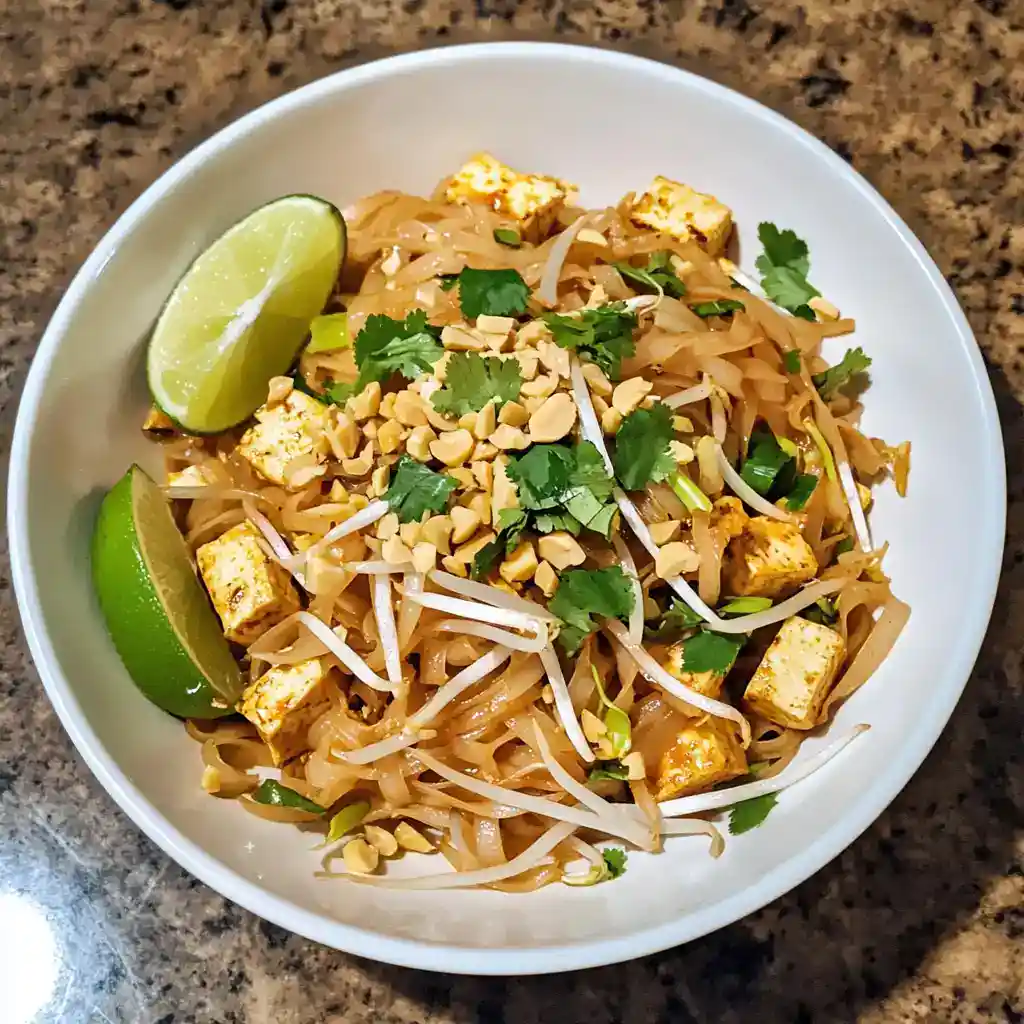
Ingredients
- 8 oz flat rice noodles (about 1/4 inch wide—don’t use vermicelli)
- 1/4 cup vegetable oil (neutral oil that can handle high heat)
- 2 cloves garlic, minced (fresh is essential here)
- 1/4 cup firm tofu, diced into 1/2-inch cubes and pressed dry
- 2 large eggs
- 1/2 cup fresh bean sprouts (buy fresh the day you’re cooking)
- 1/4 cup roasted peanuts, chopped (unsalted works best)
- 2 green onions, chopped (white and green parts)
- 1/4 cup fresh cilantro, chopped (don’t skip this!)
- Lime wedges for serving (this is crucial for authentic flavor)
Instructions
- Cook your rice noodles according to package instructions—usually this means soaking in hot water for 20-30 minutes until pliable but still firm, not mushy. Drain well and toss with a tiny bit of oil to prevent sticking. Set aside while you prep everything else.
- Get all your ingredients prepped, chopped, and within arm’s reach before you start cooking—this moves fast once you begin. Press your tofu dry with paper towels to remove excess moisture.
- Crank your largest pan or wok to medium-high heat and add the vegetable oil. Let it heat until it’s shimmering but not smoking—about 1 minute.
- Toss in the minced garlic and let it sizzle for about 1 minute, stirring constantly so it doesn’t burn. Your kitchen should smell amazing right about now.
- Push the garlic to one side of the pan and add your diced tofu. Let it sit without moving for about 2 minutes to get golden-brown edges, then flip and brown the other side for another minute or two.
- Push the tofu to the side too (everything’s hanging out on the edges now), and crack those eggs right into the center of the pan. Scramble them quickly with your spatula until just cooked through—they’ll keep cooking with everything else.
- Now add your drained rice noodles to the pan and start tossing everything together with two spatulas or tongs. Keep moving constantly, mixing the noodles with the garlic, tofu, and eggs for about 2 minutes.
- Toss in the bean sprouts and chopped peanuts. Continue stir-frying for another 2-3 minutes, tossing constantly, until the noodles are heated through and slightly chewy with a bit of char.
- Kill the heat immediately and add the chopped green onions and fresh cilantro. Give everything one final toss so the residual heat wilts the herbs slightly.
- Plate it up right away and serve with lime wedges on the side. Squeeze fresh lime juice over the top right before eating—that’s when the magic happens!
Nutrition Information (Per Serving, based on 3 servings):
- Calories: 485
- Carbohydrates: 58g
- Protein: 14g
- Fat: 22g
- Fiber: 3g
- Sodium: 125mg
- Iron: 12% DV
- Calcium: 8% DV
- Vitamin C: 15% DV
This Thai noodle dish provides balanced carbs for energy, protein from tofu and eggs, and healthy fats from peanuts and oil—a complete meal in one bowl!
Notes:
- Seriously, get everything prepped before you start cooking—once you begin, there’s no time to stop and chop things
- Don’t oversoak the noodles; they’ll continue softening in the hot pan, so err on the side of slightly firm
- Your pan needs to be properly hot—if ingredients don’t sizzle when they hit the pan, it’s not ready yet
- Keep things moving constantly once you add the noodles; standing still equals sticking and burning
- For more authentic flavor, add 2-3 tablespoons fish sauce and 1 tablespoon brown sugar when tossing the noodles
- The lime juice at the end isn’t optional—it’s what brings all the flavors together
Storage Tips:
Pad Thai really doesn’t store well—it’s meant to be eaten fresh from the wok. If you must save leftovers, store in an airtight container in the fridge for up to 1 day, but know that the noodles will get gummy and the texture won’t be the same. Reheat gently in a pan with a splash of water over medium heat, tossing constantly. Don’t microwave—it turns everything into a rubbery mess. Honestly, it’s better to make smaller portions and cook fresh rather than dealing with leftovers.
Serving Suggestions:
- Traditional Thai Style: Serve with extra lime wedges, crushed peanuts, bean sprouts, and Thai chili flakes on the side so everyone can customize their bowl
- Complete Meal: Add a simple cucumber salad on the side to balance the rich, savory noodles with something cool and refreshing
- Street Food Experience: Eat straight from the wok or serve on banana leaves for authentic Thai street food vibes
- Family Style: Make a big batch and serve in a large platter in the center of the table with all the toppings around it
Mix It Up (Recipe Variations):
Shrimp Pad Thai: Add 1/2 pound peeled, deveined shrimp along with or instead of the tofu. Cook shrimp first until pink (about 2 minutes per side), set aside, then add back at the very end so they don’t get rubbery.
Authentic Pad Thai Sauce: Mix 3 tablespoons fish sauce, 2 tablespoons tamarind paste, 2 tablespoons palm sugar (or brown sugar), and 1 tablespoon rice vinegar. Add this sauce when tossing the noodles for that classic restaurant sweet-salty-sour balance.
Spicy Pad Thai: Stir in 1-2 teaspoons chili garlic sauce or sriracha with the noodles, or serve with Thai bird chilies and crushed red pepper flakes on the side for people to add heat to taste.
Veggie-Loaded Version: Add julienned carrots, thinly sliced bell peppers, or snow peas with the tofu for extra vegetables. Just don’t go overboard or it stops being Pad Thai and becomes generic stir-fry noodles.
What Makes This Recipe Special:
Pad Thai became Thailand’s national dish in the 1930s during Prime Minister Plaek Phibunsongkhram’s campaign to create a unified Thai identity and reduce rice consumption. This stir-fried noodle dish was promoted as quick, affordable street food that could be made by vendors with simple equipment—just a wok and high heat. What makes proper Pad Thai special is the wok hei (breath of wok)—that slightly smoky, charred flavor that comes from cooking over extremely high heat. This simplified recipe focuses on the essential technique of hot-and-fast cooking with properly prepared noodles, making authentic Thai street food accessible without requiring specialty ingredients most home cooks don’t have.