
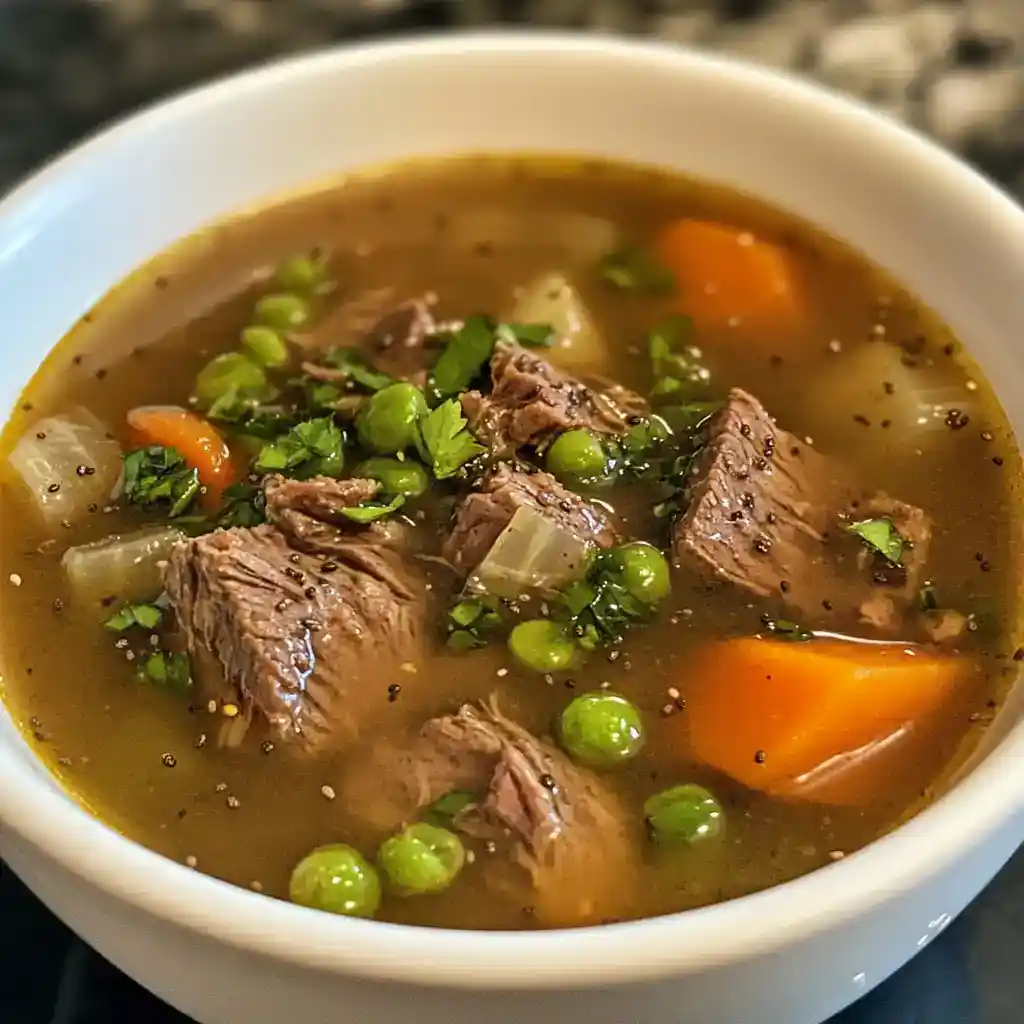
Ever wonder why some beef and vegetable soups taste like they’ve been quietly perfecting themselves on a farmhouse stove since early morning while yours tastes like it tried its best and came up a little short? I chased that feeling through more batches of mediocre beef soup than I care to admit before finally landing on this version that delivers everything I was looking for — deep, rich broth, tender fall-apart beef, and vegetables that actually taste like something rather than just taking up space in the bowl. My family now requests this every single week from October through March without exception, and my father-in-law, who has extremely specific opinions about what constitutes a proper beef soup, finished his bowl and immediately asked for the recipe. That was the moment I knew this one was worth sharing.
Here’s the Thing About This Recipe
What makes this beef and vegetable soup genuinely stand apart from every other version you’ve tried is the combination of browning the beef properly before anything else happens and building the vegetable base in layers rather than dumping everything in at once. The potatoes and tomatoes go in early to thicken and enrich the broth over the long simmer, while more delicate additions like green beans and peas go in much later to stay bright and tender rather than turning to mush. Most beef and vegetable soup recipes treat every ingredient as equally time-sensitive and end up with an overcooked, one-note result. This one treats each vegetable with the individual respect it deserves and the difference in the final bowl is remarkable. I learned this approach the hard way after years of perfectly fine but never quite memorable pots of soup.
What You’ll Need (And My Shopping Tips)
Good beef chuck cut into generous cubes is the only cut worth using here — it has exactly the right balance of fat and connective tissue to break down into something genuinely tender and flavorful over a long, patient simmer without drying out or going stringy. Don’t cheap out on your beef broth either — six cups of pale, watery broth means six cups of pale, watery soup and no amount of vegetables or seasoning will compensate for a weak foundation once everything is simmering together. I discovered this after using budget broth for an embarrassingly long stretch of my cooking life and wondering why my soup never had the depth I was looking for (happens more than I’d like to admit). For the vegetables, fresh is always best but quality frozen works well for the peas and green beans added at the end — no shame in keeping a bag of each in the freezer for exactly this kind of recipe. The potatoes, carrots, celery, and tomatoes absolutely want to be fresh because they’re going through the long simmer and need the structural integrity that frozen vegetables can’t provide. I always dice everything before the beef goes in the pot so nothing is waiting on the counter getting sad while I fumble with a cutting board mid-recipe. Here’s the full lineup:
- 1.5 lbs beef chuck, cubed
- 2 tbsp olive oil
- 1 onion, diced
- 3 cloves garlic, minced
- 2 carrots, sliced
- 2 celery stalks, chopped
- 2 medium potatoes, peeled and diced
- 1 can (14 oz) diced tomatoes
- 6 cups beef broth
- 1 cup green beans, cut into bite-sized pieces
- 1 cup frozen peas
- 1 tsp dried thyme
- 1 tsp dried rosemary
- 2 bay leaves
- Salt and pepper, to taste
- Fresh parsley, for garnish
Let’s Make This Together
Start by heating your olive oil in a large pot over medium-high heat until it shimmers confidently across the bottom of the pan. Add your cubed beef chuck and here is where I used to go wrong every single time — I would add all of it at once, the pot would drop temperature immediately, everything would steam rather than sear, and I would lose all that caramelized golden crust that carries flavor through every hour of simmering that follows. Brown the beef in two batches without crowding, giving each side a full 2-3 minutes undisturbed before turning. That deeply browned surface on every piece of beef is the entire flavor foundation of your beef and vegetable soup and it cannot be rushed or skipped without consequences. Once the beef is browned and still sitting in the pot, drop the heat to medium and add the diced onion and minced garlic. Cook for 3-4 minutes until softened and fragrant, scraping up any browned bits from the bottom of the pot as you stir — every one of those bits belongs in the broth. Add the sliced carrots, chopped celery, and diced potatoes and stir everything together for another 2 minutes. Stir in the thyme and rosemary and let the dried herbs bloom briefly in the heat before any liquid goes in. Pour in the beef broth and the entire can of diced tomatoes with all their juices. Add the bay leaves, season with salt and pepper, and give everything a thorough stir. Here’s my secret — taste the broth right now before the long simmer starts. This is your easiest opportunity to get the seasoning right and the best possible moment to adjust it. Bring the pot to a boil, then drop the heat to low, cover, and simmer for 1.5 hours without lifting the lid. If you love deeply satisfying slow-cooked soups and stews like this one, my Beef and Hemp Sprout Stew is another one-pot recipe worth keeping permanently in your cold-weather dinner rotation. After 1.5 hours, remove the bay leaves and stir in the green beans. Simmer uncovered for 10 minutes, then add the frozen peas and cook for a final 5 minutes until everything is tender and the broth has reduced slightly into something beautifully rich and thick. Taste one final time, adjust seasoning as needed, and serve immediately with fresh parsley scattered generously over every bowl.
If This Happens, Don’t Panic
Beef still tough at the 90-minute mark? Keep the lid on and keep simmering — chuck sometimes needs up to 2 hours depending on the cut and age of the meat, and patience is genuinely the only fix. Broth looking too thin after the full cook time? The uncovered simmer with the green beans and peas helps reduce and concentrate it — give it an extra 5 minutes uncovered and watch it improve noticeably. Vegetables gone mushy and overcooked? The heat was too high during the simmer — a genuine low and lazy bubble rather than an aggressive boil keeps everything cooking at the right pace. This beef and vegetable soup is forgiving at almost every stage so don’t panic if something looks slightly off at the midpoint — it almost always comes together beautifully by the time it reaches the bowl.
When I’m Feeling Creative
Tomato and Herb Beef Soup — Double the diced tomatoes and add half a teaspoon of smoked paprika with the other herbs. The deeper, slightly smoky tomato base that develops through the long simmer is extraordinary and makes this feel like a completely different and equally wonderful soup. Winter Root Vegetable Version — Add diced parsnip, turnip, and sweet potato alongside the regular carrots and potatoes. Around the holidays this is the version I make when I want something that feels genuinely special and seasonal without requiring any extra effort. Spicy Beef and Vegetable Soup — Add a pinch of red pepper flakes and half a teaspoon of cayenne with the herbs. The heat builds slowly through the long simmer and adds a gentle warming quality to every bowl that is particularly wonderful on the very coldest evenings. Herb-Garden Version — Swap the dried herbs for fresh rosemary and thyme sprigs added with the broth and removed before serving. The difference in herbal brightness in the finished soup is immediately noticeable and worth doing on weekends when you have fresh herbs available.
Why This Works So Well
Beef and vegetable soup in various forms has been a cornerstone of home cooking across virtually every food culture that has access to both cattle and root vegetables — appearing in everything from French pot-au-feu to Italian minestrone to American farmhouse cooking with remarkably similar underlying logic regardless of the regional variations in specific ingredients and seasoning. According to Wikipedia’s entry on beef soup, the dish appears across dozens of distinct culinary traditions worldwide, united by the principle that slow simmering extracts maximum flavor and collagen from beef bones and connective tissue into the surrounding broth. What makes this particular beef and vegetable soup so satisfying is the careful attention to when each vegetable enters the pot — a simple principle that most weeknight recipes ignore entirely and that makes all the difference between a soup that tastes considered and one that just tastes cooked.
Things People Ask Me About This Recipe
Can I make this beef and vegetable soup ahead of time? This is one of the genuinely great make-ahead soups — it tastes dramatically better the following day after the beef has had overnight to further tenderize in the broth and all the flavors have had time to meld and deepen together. Make it up to 3 days ahead and refrigerate in a sealed container, reheating gently on the stovetop with a splash of broth to loosen it back to the right consistency.
What vegetables work best in this soup? The vegetables listed here are my standard lineup but this soup is genuinely flexible — parsnips, turnips, sweet potato, butternut squash, zucchini, and corn all work beautifully. The general rule is that dense root vegetables go in early with the potatoes and carrots, while more delicate vegetables go in during the final 15 minutes alongside the green beans and peas.
Can I freeze this soup? Yes — freeze it for up to 3 months in an airtight container. The potatoes soften slightly after freezing but the overall flavor stays completely intact and delicious. Thaw overnight in the fridge and reheat gently on the stovetop over low heat with a splash of broth.
Is this beef and vegetable soup beginner-friendly? Completely. If you can brown meat and chop vegetables, you can make this soup from start to finish without any difficulty. The long unattended simmer time does most of the heavy lifting while you do something else entirely, and the technique of adding vegetables in stages is simple to follow once you understand the logic behind it.
How long does leftover soup keep in the fridge? Up to 4 days in a sealed airtight container. The soup thickens considerably as it sits — add a generous splash of beef broth when reheating on the stovetop over low heat and stir until it loosens back to the right consistency before serving.
Do I need to peel the potatoes? Peeling gives the soup a cleaner, more refined look and slightly smoother texture in the broth. Leaving the skins on adds a little extra nutrition and a more rustic character that is equally delicious — it genuinely comes down to personal preference and how much time you have.
Before You Head to the Kitchen
I couldn’t resist sharing this recipe because a genuinely great beef and vegetable soup is one of those foundational things that every home cook deserves to have completely figured out — the kind of pot you can make on a Sunday and feel good about all week long. The best beef and vegetable soup evenings in our house end with empty bowls, someone using bread to chase the last of that rich broth around the bottom, and my father-in-law nodding approvingly without saying anything because some compliments are communicated entirely through silence. You’ve got this — go get that pot properly hot.
Print
Beef and Vegetable Soup
Description
A rich, deeply satisfying beef and vegetable soup built on a slow-simmered beef broth with fall-apart tender chuck, hearty root vegetables, and bright green beans and peas added at exactly the right moment — classic one-pot comfort food that tastes like it took all day and rewards every minute of patient simmering.
Prep Time: 20 minutes | Cook Time: 1 hour 45 minutes | Total Time: 2 hours 5 minutes | Servings: 6
Ingredients
- 1.5 lbs beef chuck, cubed
- 2 tbsp olive oil
- 1 onion, diced
- 3 cloves garlic, minced
- 2 carrots, sliced
- 2 celery stalks, chopped
- 2 medium potatoes, peeled and diced
- 1 can (14 oz) diced tomatoes with juices
- 6 cups beef broth (use a quality one — the foundation matters)
- 1 cup green beans, cut into bite-sized pieces
- 1 cup frozen peas
- 1 tsp dried thyme
- 1 tsp dried rosemary
- 2 bay leaves
- Salt and pepper, to taste
- Fresh parsley, for garnish
Instructions
- Heat olive oil in a large pot over medium-high heat. Brown beef in batches without crowding — 2-3 minutes per side undisturbed. Don’t rush this step.
- Drop heat to medium. Add onion and garlic, cook for 3-4 minutes until softened. Scrape up all browned bits from the pot bottom.
- Add carrots, celery, and potatoes. Stir for 2 minutes. Add thyme and rosemary and let bloom briefly.
- Pour in beef broth and diced tomatoes. Add bay leaves, season with salt and pepper. Taste the broth now and adjust.
- Bring to a boil, reduce to low, cover, and simmer undisturbed for 1.5 hours.
- Remove bay leaves. Add green beans and simmer uncovered for 10 minutes.
- Add frozen peas and cook for a final 5 minutes.
- Taste, adjust seasoning, and serve hot garnished generously with fresh parsley.
Nutrition Information (Per Serving):
- Calories: 360
- Carbohydrates: 24g
- Protein: 34g
- Fat: 13g
- Fiber: 5g
- Sodium: 760mg
- Vitamin A: 80% DV | Vitamin C: 35% DV | Iron: 25% DV | Potassium: 22% DV The combination of beef, potatoes, carrots, and peas delivers a genuinely complete nutritional profile — protein, complex carbohydrates, fiber, and an impressive range of vitamins and minerals in every single bowl.
Notes:
- Brown the beef in batches without crowding — this is the non-negotiable foundation step that most home cooks rush and every good beef soup depends on.
- Taste the broth before the long simmer starts — it is the easiest and most effective moment to get seasoning right.
- Keep the simmer genuinely low throughout — a rolling boil toughens the beef and turns the vegetables to mush.
- Add green beans and peas only in the final 15 minutes — they need significantly less cooking time than everything else and will become unpleasantly soft if they go in earlier.
Storage Tips:
- Refrigerator: Up to 4 days in a sealed container. Flavors deepen significantly overnight.
- Freezer: Up to 3 months. Thaw overnight and reheat gently on the stovetop with a splash of broth.
- Reheat over low heat on the stovetop — add a splash of broth as needed since the potatoes absorb liquid as the soup sits.
Serving Suggestions:
- Crusty sourdough or whole grain bread for soaking up the rich broth
- A simple green salad alongside to balance the heartiness of the bowl
- Over egg noodles for an even more substantial cold-weather meal
- A dollop of horseradish cream stirred in at the table for a sharp, warming finish
Mix It Up:
- Smoky Tomato Version: Double the diced tomatoes and add smoked paprika
- Winter Root Version: Add parsnip, turnip, and sweet potato alongside the regular vegetables
- Spicy Version: Add red pepper flakes and cayenne with the herbs
- Fresh Herb Version: Use fresh rosemary and thyme sprigs instead of dried
What Makes This Recipe Special:
The principle behind this beef and vegetable soup — treating every ingredient according to its individual cooking time rather than adding everything at once — is what separates a genuinely great result from an acceptable one. Dense root vegetables and potatoes go in early to break down slowly and thicken the broth. Delicate green beans and peas go in during the final 15 minutes to stay bright, tender, and fresh-tasting. This simple discipline applied consistently produces a soup where every element tastes exactly as it should — and that coherence is what makes every bowl so satisfying from the very first spoonful to the very last.