
Ever wonder why some fish dishes just never taste right at home? I used to be terrified of cooking fish until I discovered this incredible apple marinated fish technique. Now my family devours this tender, flavorful white fish every week, and I’m pretty sure my neighbor thinks I’m some kind of seafood cooking genius (if only she knew how many dry, flavorless fish dinners I ruined before getting this right).
Here’s the Thing About This Recipe
The secret to amazing apple marinated fish isn’t complicated seasoning—it’s using the natural enzymes in apples and vinegar to tenderize the fish while infusing it with sweet, tangy flavors. What makes this technique work so well is how the apple cider marinade breaks down the proteins gently, creating incredibly tender fish that practically melts in your mouth. I learned the hard way that plain seasoned fish just can’t compete with this marinating method, and the fresh apple slices cook down into this amazing sweet-tart base. It’s honestly that simple, no fancy chef tricks needed.
What You’ll Need (And My Shopping Tips)
Good white fish fillets are worth seeking out—I always go for cod, tilapia, or halibut when they look fresh and smell like the ocean (not fishy at all). Don’t cheap out on the fish because it’s the star here. I learned this after buying those sad, frozen fillets once and wondering why my marinade couldn’t save them.
For the apple, any crisp green variety works perfectly—Granny Smith is my go-to because they hold their shape when cooked and provide the right tartness (I always grab an extra apple because someone inevitably snacks on the slices while I’m prepping). The apple cider vinegar should be the real deal with the “mother” visible at the bottom—it has better flavor than the clear processed stuff.
Fresh garlic and thyme make all the difference here. If your dried thyme has been sitting around since last year, spring for fresh—it’s what makes this dish smell incredible while baking. Good quality honey and olive oil round out the marinade, creating this perfect balance of sweet, tart, and aromatic flavors.
External link to fish selection guide can help you choose the best white fish varieties for marinating.
Here’s How We Do This
Start by whisking together your marinade in a shallow dish—apple cider vinegar, honey, olive oil, minced garlic, thyme, salt, and pepper. Here’s where I used to mess up: make sure that honey is completely dissolved or you’ll get weird clumpy spots.
Pat those fish fillets completely dry with paper towels before they go into the marinade. Seriously, dry that fish well—wet fillets don’t absorb the flavors properly. Turn the fillets to coat evenly, then cover and pop them in the fridge for at least 30 minutes. I usually do an hour when I have time because the flavors get even better.
Now for the fun part: crank your oven to 400°F and slice that apple thin—about 1/8 inch thick works perfectly. Arrange the apple slices in a single layer on your baking dish like you’re making an apple carpet for the fish to rest on.
Remove the fish from the marinade (save some of that liquid—you’ll need it) and place the fillets on top of the apple slices. Drizzle a little of the reserved marinade over each piece. Here’s my secret: the apples act like a natural steaming basket, keeping the fish incredibly moist while adding sweet flavor.
Bake for 15-20 minutes, depending on the thickness of your fillets. The fish is done when it flakes easily with a fork and looks opaque throughout. Those apple slices will be tender and slightly caramelized—absolutely perfect for spooning over the fish.
Try pairing this with my herb roasted vegetables for a complete, healthy dinner.
If This Happens, Don’t Panic
Fish turned out dry and overcooked? You probably left it in too long—fish goes from perfect to rubber really fast. Next time, check it at 12 minutes if your fillets are thin. If your apple slices turned mushy, you either sliced them too thin or your oven runs hot. Stick with 1/8-inch thick slices and trust your timing.
Marinade tastes too sharp or vinegary? Happens sometimes, especially if your apple cider vinegar is particularly strong. Add another tablespoon of honey to balance it out, or let the fish marinate for less time. If the fish seems bland even after marinating, your fillets might have been frozen too long—fresh fish absorbs flavors much better.
Fish sticking to the baking dish? This usually means your dish wasn’t greased well enough or the fish was too wet going in. I always give my baking dish a light spray with cooking oil now, even with the apple base.
When I’m Feeling Creative
When fall rolls around, I’ll make Spiced Apple Fish by adding a pinch of cinnamon and nutmeg to the marinade—it smells incredible and tastes like autumn on a plate. For Herb Apple Fish, I add fresh rosemary and sage along with the thyme, creating this amazing Mediterranean-meets-orchard flavor.
If you want something richer, Apple Butter Glazed Fish uses 2 tablespoons of apple butter mixed into the marinade instead of honey—it creates this gorgeous caramelized coating. Around here, we’ve discovered that this technique works amazingly with salmon too, though you’ll want to reduce the cooking time to about 12-15 minutes.
For lighter eating, I sometimes make this as Apple Fish Packets by wrapping each fillet with apples in parchment paper—it steams perfectly and makes cleanup a breeze.
What Makes This Recipe Special
This apple marinated fish represents the perfect marriage of fruit-forward flavors with delicate white fish, creating a dish that feels both homey and elegant. Unlike heavy cream-based fish sauces, this technique uses natural fruit acids to enhance rather than mask the fish’s flavor while keeping it incredibly moist.
What sets this apart from other fish marinades is the dual function of the apples—they both flavor the marinade and create a natural steaming base during cooking. This technique comes from traditional French cooking methods where fruits are used to tenderize proteins while adding complementary flavors.
Learn more about fish marinating techniques to understand why acidic marinades work so well with delicate proteins.
Things People Ask Me About This Recipe
Can I marinate the fish longer than 30 minutes?
You can go up to 2 hours, but don’t push it beyond that. Fish is delicate and too much acid will actually start “cooking” it, making the texture mushy. I’ve found 45 minutes to 1 hour is the sweet spot for maximum flavor without compromising texture.
What if I can’t find fresh thyme for this apple fish?
Dried thyme works fine—just use about 1/2 teaspoon instead of the full teaspoon fresh. You could also substitute fresh rosemary or sage, but thyme really complements the apple flavors best. In a pinch, Italian seasoning works too.
How do I know when the marinated fish is properly cooked?
The fish should flake easily when you insert a fork and twist gently. It should be opaque throughout with no translucent spots. Internal temperature should reach 145°F if you want to be precise, but the fork test is usually all you need.
Can I use this marinade technique with other types of fish?
Absolutely! This works great with any white fish like halibut, mahi-mahi, or even salmon. Just adjust cooking times—thicker fish takes longer, and oily fish like salmon cooks faster. The marinade is gentle enough for any fish.
What’s the best way to store leftover apple marinated fish?
Store covered in the refrigerator for up to 2 days. The fish reheats okay in the oven at 300°F, but it’s honestly best eaten fresh. The apples get a bit softer after storing, but they still taste great.
Can I make this apple fish recipe without honey?
Sure! Maple syrup works beautifully, or you can use brown sugar if that’s what you have. The sweetness balances the vinegar’s acidity, so don’t skip the sweet element entirely—it’s crucial for the marinade balance.
One Last Thing
I couldn’t resist sharing this recipe because this apple marinated fish has completely changed how my family thinks about seafood. The best apple fish nights are when everyone’s asking for seconds and the kitchen smells like an orchard meets the ocean. Trust me, once you try marinating fish with fruit like this, plain seasoned fish will never feel exciting enough.
Print
Marinated Apples Fish
Description
Tender white fish marinated in apple cider vinegar and honey, then baked on a bed of sweet apple slices for the perfect balance of flavors
Prep Time: 10 minutes | Marinating Time: 30 minutes | Cook Time: 20 minutes | Total Time: 1 hour | Servings: 4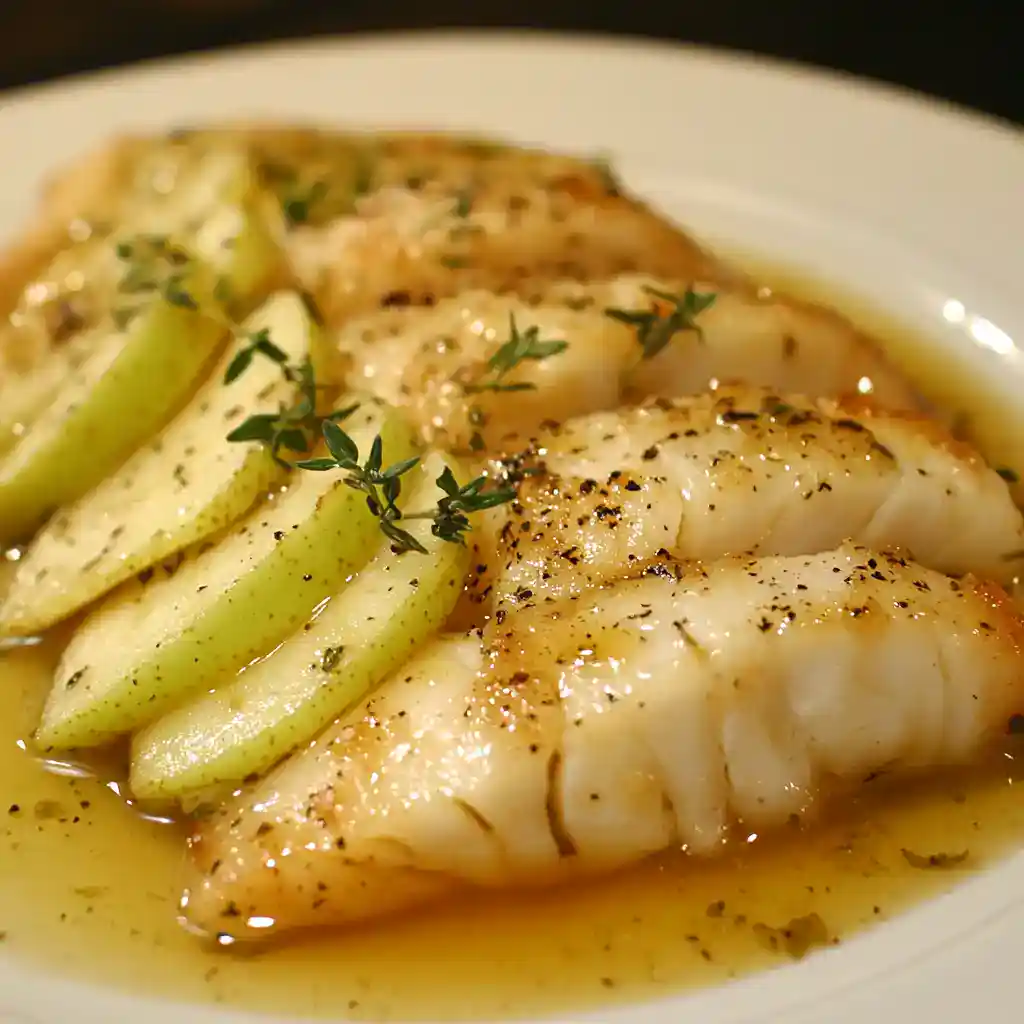
Ingredients
- 4 fillets white fish (cod, tilapia, or halibut), about 6 oz each
- 1 green apple, thinly sliced (Granny Smith works perfectly)
- 1/4 cup apple cider vinegar (with “mother” preferred)
- 2 tablespoons honey
- 1 tablespoon olive oil
- 2 cloves garlic, minced
- 1 teaspoon fresh thyme leaves (or 1/2 teaspoon dried)
- Salt and pepper, to taste
Instructions
- In a shallow dish, whisk together apple cider vinegar, honey, olive oil, minced garlic, thyme, salt, and pepper until honey is completely dissolved.
- Pat fish fillets completely dry with paper towels—this is crucial for flavor absorption.
- Place fish fillets in the marinade, turning to coat evenly on both sides. Cover and refrigerate for at least 30 minutes, up to 1 hour.
- Preheat oven to 400°F (200°C) and lightly grease a baking dish.
- Slice the green apple into 1/8-inch thick rounds and arrange in a single layer on the bottom of your baking dish.
- Remove fish from marinade (reserve some liquid) and place fillets on top of the apple slices.
- Drizzle reserved marinade over the fish fillets—don’t use it all, just enough to keep things moist.
- Bake for 15-20 minutes, until fish flakes easily with a fork and is opaque throughout.
- Serve immediately, spooning the tender cooked apples and pan juices over each fillet.
Nutrition Information (Per Serving):
- Calories: 285
- Carbohydrates: 18g
- Protein: 35g
- Fat: 8g
- Fiber: 2g
- Sodium: 320mg
- Vitamin C: 6mg (10% DV)
- Omega-3 fatty acids: 400mg (varies by fish type)
This dish provides lean protein with beneficial omega-3s while being naturally gluten-free and heart-healthy.
Notes:
- Seriously, pat that fish dry before marinating—wet fish doesn’t absorb flavors properly
- Don’t marinate longer than 2 hours or the acid will make the texture mushy
- Every oven runs differently, so check your fish at 15 minutes if fillets are thin
- The apples act like a natural steaming base, keeping the fish incredibly moist
Storage Tips:
- Refrigerator: Store covered for up to 2 days—best eaten fresh but reheats okay at 300°F
- Freezer: The cooked dish doesn’t freeze well due to the apple content and delicate fish texture
- Make-ahead: You can marinate the fish up to 2 hours ahead, but cook fresh for best results
Serving Suggestions:
- Classic: Steamed rice and green vegetables
- Light: Mixed greens salad with lemon vinaigrette
- Hearty: Roasted potatoes and seasonal vegetables
- Elegant: Wild rice pilaf and asparagus
Mix It Up (Recipe Variations):
Spiced Apple Fish: Add 1/4 teaspoon cinnamon and pinch of nutmeg to marinade for warm fall flavors
Herb Apple Fish: Include fresh rosemary and sage along with thyme for Mediterranean flair
Apple Butter Glazed Fish: Replace honey with 2 tablespoons apple butter for richer, caramelized flavor
Apple Fish Packets: Wrap individual portions in parchment paper for perfect steaming and easy cleanup
What Makes This Recipe Special:
This apple marinated fish uses natural fruit enzymes and gentle acids to tenderize delicate white fish while infusing sweet-tart flavors throughout. The technique creates a dual benefit where sliced apples serve as both flavoring agent and natural steaming base, resulting in incredibly moist fish with complex, balanced flavors that appeal even to seafood skeptics.