
Have you ever made a stew that surprised you — where the combination of ingredients sounded a little unusual on paper but turned out to be exactly right in the bowl? That’s this beef and mustard sprout stew in a nutshell. I was genuinely skeptical the first time I stirred Dijon mustard into a beef broth, convinced it would taste sharp and overwhelming. What actually happened was the opposite — the mustard mellowed beautifully during the long simmer and created this deep, slightly tangy, wonderfully complex backdrop that made the whole stew taste like something I’d order at a proper restaurant rather than something I threw together on a Tuesday night.
Here’s the Thing About This Recipe What makes this beef and mustard sprout stew so memorably good is the Dijon mustard working its way through the tomato and beef broth base over a full hour and a half of low simmering. Raw Dijon is sharp and pungent but given time and heat it transforms into something rounded and savory that adds a dimension of flavor you’d have a hard time identifying if you didn’t know it was there — you just know the stew tastes unusually good. I learned the hard way that adding the mustard at the very end instead of at the beginning of the simmer gives you a completely different and far less integrated result. It needs the full cooking time to become part of the broth rather than sitting on top of it.
What You’ll Need (And My Shopping Tips) Good beef stew meat is the foundation everything else is built on — I always reach for chuck specifically because the fat and connective tissue break down into natural gelatin during the long braise that gives the broth a silky richness no lean cut can replicate, and I learned that after one regrettable pot of round steak that stayed chewy and dry no matter how long I left it on the stove (happens more than I’d like to admit). For the Brussels sprouts, look for firm, bright green heads that feel dense and heavy — limp or yellowing sprouts have already lost their flavor and will turn unpleasantly mushy during the long simmer. This overview of Brussels sprouts covers what to look for when buying and why they’re such a nutritionally outstanding addition to a hearty stew like this one. For the Dijon mustard, a good quality French-style Dijon rather than a generic yellow mustard makes a noticeable difference — the flavor is sharper, more complex, and more interesting in the finished broth. I always grab extra fresh parsley because a generous scatter over each bowl right before serving adds a brightness that cuts beautifully through the richness of this stew.
- 1 lb beef stew meat, cubed (chuck recommended)
- 1 tbsp olive oil
- 1 onion, chopped
- 2 cloves garlic, minced
- 2 carrots, sliced
- 2 celery stalks, chopped
- 1 lb Brussels sprouts, halved
- 1 can (14 oz) diced tomatoes
- 4 cups beef broth
- 2 tbsp Dijon mustard (good quality French-style recommended)
- Salt and pepper, to taste
- Fresh parsley, chopped for garnish
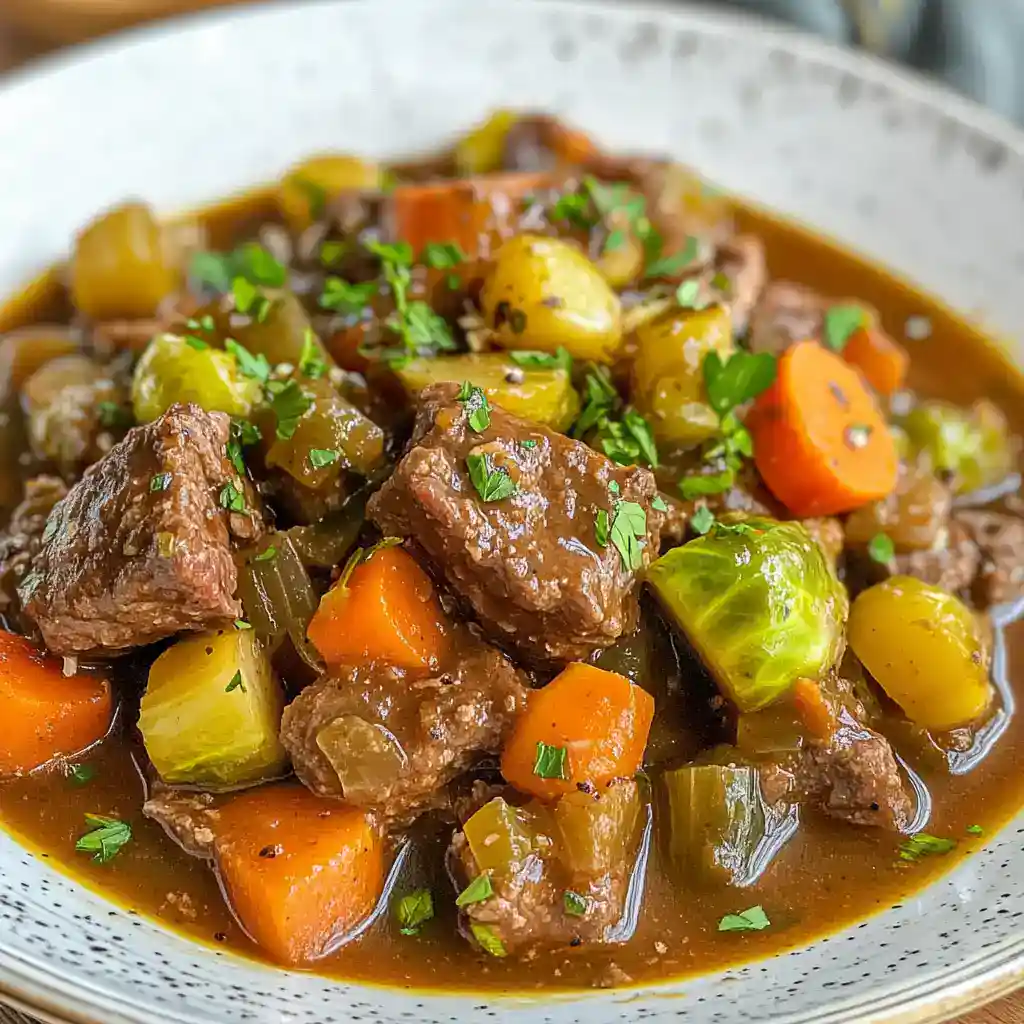
Let’s Make This Together Start by heating the olive oil in a large pot over medium-high heat until it’s properly hot — a hot pot means a real sear on the beef and a real sear is what builds the flavor foundation that makes this stew taste genuinely deep and complex rather than just beef in liquid. Add the beef stew meat and brown it properly on all sides without moving it around too much — here’s where I used to mess up every single time by stirring constantly and ending up with grey, steamed cubes instead of that gorgeous dark caramelized crust that transforms the broth completely. Don’t be me. Let each side sit undisturbed until it releases naturally from the pot bottom and develops real color. Add the chopped onion and minced garlic right into the same pot and sauté for two to three minutes until fragrant, scraping up all those wonderful browned bits from the bottom as you go — those bits are pure concentrated flavor and dissolving them into the vegetables is one of the most important moments in the whole recipe. Stir in the sliced carrots and chopped celery and cook for a few minutes until slightly softened. Add the halved Brussels sprouts, followed by the diced tomatoes with all their juices and the beef broth. Bring everything to a simmer, then stir in the Dijon mustard, salt, and pepper until the mustard is fully incorporated into the broth. If you love deeply flavored slow-simmered beef stews built on bold, unexpected ingredients, you might also enjoy this Beef and Sunflower Sprout Stew for another hearty and satisfying bowl with a fresh finishing twist. Reduce heat to low, cover, and let this beef and mustard sprout stew simmer undisturbed for a full hour and a half. When the beef pulls apart easily with a fork and the Brussels sprouts are completely tender and have absorbed all that mustard-spiked broth, you’re done. Taste, adjust seasoning, ladle into bowls, and finish with a generous handful of fresh parsley.
If This Happens, Don’t Panic Beef still tough at 90 minutes? Don’t panic — just give it another 20 to 30 minutes on low and check again with a fork. Some chuck cuts need extra convincing and this stew handles additional simmering gracefully without overcooking the vegetables. Broth tasting too sharp from the mustard? The simmer was probably too short — the longer this beef and mustard sprout stew cooks, the more the mustard mellows and integrates into the broth. Give it more time before adding anything else. Brussels sprouts turning completely soft and falling apart? They’ve been in the pot a little too long — next time add them 30 minutes before the end of the simmer rather than at the beginning so they finish tender but still holding their shape. I actually prefer them a little soft in this stew but it’s worth knowing for texture preference.
When I’m Feeling Creative When I’m feeling fancy, I’ll add a teaspoon of whole grain mustard alongside the Dijon for a “Double Mustard Beef Stew” where those little mustard seeds pop occasionally in the broth and add a texture and burst of flavor that makes every few spoonfuls feel like a small discovery. Around the holidays, I stir in a cup of diced potatoes with the carrots and celery for a “Hearty Holiday Beef and Brussels Stew” that’s substantial enough to anchor a whole winter dinner table. For a “Smoky Beef and Mustard Sprout Stew,” I add a teaspoon of smoked paprika with the vegetables — the smokiness weaves through the mustard flavor in a way that creates remarkable depth and makes the broth taste like it’s been going for days rather than hours. And for a lighter weeknight version when the full simmer time isn’t available, using thinly sliced sirloin and halved Brussels sprouts with a 30-minute simmer makes a quicker “Weeknight Mustard Beef Bowl” that still delivers the core flavor combination in a fraction of the time.
Why This Works So Well The combination of mustard and beef in slow-cooked dishes has deep roots in French and Belgian culinary tradition, where Dijon mustard has been used as a braising ingredient for centuries to add complexity and depth to beef-based stews and braises in a way that wine-based cooking approaches from a different direction. The acidity and sharp aromatic compounds in Dijon mustard break down during extended cooking into something that functions more like a flavor amplifier than a distinct ingredient — deepening the savory quality of the beef broth and adding a subtle tanginess that makes every other flavor in the pot taste more defined and interesting. What makes this beef and mustard sprout stew particularly satisfying is that it applies this classical French technique to a completely accessible weeknight format with ingredients that require no special sourcing or preparation beyond what most home cooks already know how to do.
Things People Ask Me About This Recipe
Can I make this beef and mustard sprout stew ahead of time? Yes, and it genuinely tastes better the next day — the mustard continues to mellow and integrate overnight in the fridge in a way that makes the whole broth more rounded and less sharp. Reheat gently on the stovetop over low heat with a splash of beef broth to loosen the consistency and add fresh parsley right before serving rather than before storing.
Can I freeze this stew? Absolutely — this beef and mustard sprout stew recipe freezes well for up to three months. Be aware that Brussels sprouts can soften significantly after freezing and reheating, so if texture is important to you consider adding fresh halved Brussels sprouts during the reheating process instead. Cool completely before transferring to airtight containers and thaw overnight in the fridge before reheating gently on the stovetop.
Will the Dijon mustard make this stew taste overwhelmingly mustardy? Not if you give it the full simmer time — two tablespoons of Dijon in four cups of broth mellows completely over 90 minutes of low heat into something that adds complexity and a slight tang without being identifiable as mustard to most people at the table. The most common reaction from first-time eaters is that the stew tastes unusually good and rounded without being able to name why.
Is this beef and mustard sprout stew beginner-friendly? Very much so — the technique is browning meat, building a vegetable base, adding liquid and mustard, and simmering patiently. The most important moments are giving the beef real browning time upfront and allowing the full 90-minute simmer, and neither of those requires anything beyond a timer and a willingness to wait.
What’s the best cut of beef for this recipe? Chuck stew meat is genuinely the best choice for a long-simmered stew like this — the fat and connective tissue break down over the cooking time into natural gelatin that makes the broth silky and rich in a way no lean cut can replicate. Avoid round or sirloin for this recipe since they turn dry and stringy under the same conditions that make chuck fall apart beautifully.
What’s the best way to store leftover stew? Keep leftovers in an airtight container in the fridge for up to three days — the flavor improves noticeably with each day as the mustard continues to develop in the broth. Reheat on the stovetop over low heat with a splash of beef broth to loosen the consistency back to the right texture for serving.
One Last Thing I couldn’t resist sharing this beef and mustard sprout stew because it’s one of those recipes that teaches you something genuinely useful about cooking — that bold ingredients need time to become something completely different from what they are on their own. The best evenings with this dish are when the pot has been going for an hour and a half and you take your first taste of the broth and realize the mustard has become something extraordinary. You’ve got this — now go make something boldly wonderful.
Print
Beef and Mustard Sprout Stew
Description
A bold, hearty beef and mustard sprout stew with tender slow-braised chuck, Brussels sprouts simmered until silky, and a Dijon mustard-spiked tomato and beef broth that develops remarkable depth over a long, patient cook — French-inspired comfort food at its most satisfying.
Prep Time: 15 minutes | Cook Time: 1 hour 45 minutes | Total Time: 2 hours | Servings: 4
Ingredients
- 1 lb beef stew meat, cubed (chuck recommended)
- 1 tbsp olive oil
- 1 onion, chopped
- 2 cloves garlic, minced
- 2 carrots, sliced
- 2 celery stalks, chopped
- 1 lb Brussels sprouts, halved
- 1 can (14 oz) diced tomatoes
- 4 cups beef broth
- 2 tbsp Dijon mustard (good quality French-style recommended)
- Salt and pepper, to taste
- Fresh parsley, chopped for garnish
Instructions
- Heat olive oil in a large pot over medium-high heat. Add the beef stew meat and brown properly on all sides without stirring too much — let the color develop.
- Add the chopped onion and minced garlic and sauté for 2 to 3 minutes, scraping up the browned bits from the bottom of the pot.
- Stir in the carrots and celery and cook for a few minutes until slightly softened.
- Add the halved Brussels sprouts, diced tomatoes with their juices, and beef broth. Bring to a simmer.
- Stir in the Dijon mustard, salt, and pepper until fully incorporated into the broth.
- Reduce heat to low, cover, and simmer for 1.5 hours until the beef is fork-tender and the Brussels sprouts are completely tender.
- Taste and adjust seasoning as needed.
- Ladle into bowls and garnish generously with fresh chopped parsley. Serve hot.
Nutrition Information (Per Serving):
- Calories: 355
- Carbohydrates: 22g
- Protein: 34g
- Fat: 14g
- Fiber: 7g
- Sodium: 740mg
- Vitamin C: 120% DV | Vitamin K: 180% DV | Iron: 22% DV | Potassium: 20% DV
Notes:
- Chuck stew meat is the right choice — lean cuts turn dry and stringy during the long braise.
- Proper browning upfront without constant stirring is the single most important flavor step in this recipe.
- Good quality French-style Dijon makes a noticeably more complex and interesting broth than generic mustard.
- The mustard needs the full 90-minute simmer to mellow properly — don’t taste for mustard sharpness before then.
Storage Tips:
- Refrigerate in an airtight container for up to 3 days — flavor improves each day.
- Freeze for up to 3 months — Brussels sprouts soften further after freezing so consider adding fresh ones when reheating.
- Reheat on the stovetop over low heat with a splash of beef broth to loosen the consistency.
- Add fresh parsley after reheating rather than before storing for the brightest finish.
Serving Suggestions:
- Serve with thick slices of crusty French bread for soaking up every drop of that gorgeous mustard-spiked broth.
- A simple green salad with a light lemon vinaigrette on the side cuts through the richness of the stew beautifully.
- Creamy mashed potatoes underneath the stew instead of alongside it makes this an incredibly hearty and complete one-bowl meal.
- A final crack of black pepper and extra fresh parsley right before eating makes each bowl look genuinely restaurant-worthy.
Mix It Up:
- Double Mustard Beef Stew: Add a teaspoon of whole grain mustard alongside the Dijon for occasional mustard seed bursts and extra texture throughout.
- Hearty Holiday Beef and Brussels Stew: Add diced potatoes with the carrots and celery for an even more substantial cold-weather version.
- Smoky Beef and Mustard Sprout Stew: Add a teaspoon of smoked paprika with the vegetables for a smoky depth that weaves beautifully through the mustard flavor.
- Weeknight Mustard Beef Bowl: Use thinly sliced sirloin and reduce simmer time to 30 minutes for a faster version that delivers the core flavors on a busy evening.
What Makes This Recipe Special: This beef and mustard sprout stew draws from centuries of French and Belgian braising tradition where Dijon mustard has been used as a slow-cooking ingredient rather than a condiment — transforming during extended low heat from something sharp and pungent into a rounded, savory flavor amplifier that makes every other ingredient in the pot taste more defined and interesting. The technique of adding the mustard at the beginning of the simmer rather than at the end is the key detail that separates a truly integrated, complex broth from a merely seasoned one. Combined with properly caramelized chuck beef, hearty Brussels sprouts, and a full 90 minutes of patient simmering, this is a stew that delivers genuinely extraordinary results from a completely approachable process.