
Have you ever noticed how Swiss chard sits in the produce section looking dramatic and beautiful — those bright red and yellow stems, those enormous dark green leaves — and yet somehow gets bypassed in favor of spinach and kale every single time? I was guilty of this for years until I threw a whole bunch into a slow-simmered beef stew and discovered what Italian grandmothers have apparently known for centuries: Swiss chard in braised dishes is genuinely extraordinary. It wilts into something silky and slightly earthy that makes the whole broth taste more complex and nourishing, and the way it holds its body after 15 minutes of simmering means every bowl has real substance. If Swiss chard has been a beautiful mystery at your grocery store, this beef and Swiss chard stew solves that completely.
Here’s the Thing About This Recipe
What makes this beef and Swiss chard stew work is the chard going in at precisely the right moment — after the beef has become completely tender and the broth has developed genuine depth over 1.5 to 2 hours of simmering, but with enough time remaining for the leaves to wilt fully and release their flavor into the broth without overcooking into mush. That 10-15 minute window at the end is when the stew goes from very good to genuinely special — the chard’s slight bitterness cuts through the richness of the beef broth and the tomatoes add acidity that makes the whole pot taste balanced and bright. I learned the hard way that adding Swiss chard at the beginning produces something brown, textureless, and entirely without the character that makes it worth using.
Gathering Your Ingredients (Don’t Stress!)
Good Swiss chard is worth selecting carefully at the store — look for firm, vibrant leaves without any yellowing or wilting, and bunches with colorful stems that feel crisp rather than limp. I learned this after one batch made with past-its-prime chard that turned oddly bitter and almost slimy during the simmer rather than silky and pleasantly earthy (happens more than I’d like to admit).
Removing the stems from Swiss chard before chopping the leaves is worth doing properly — the stems take considerably longer to soften than the leaves and can remain unpleasantly chewy if cooked for only 15 minutes. Don’t throw the stems away though — dice them and sauté separately as a vegetable side or add them to the stew at the same time as the carrots and celery where they’ll have the full cook time they need. Swiss chard has been cultivated in the Mediterranean region since ancient times and is particularly prominent in Italian, French, and Spanish cooking traditions where it appears in soups, stews, and braised dishes as one of the most versatile and nutritious cooking greens available. Good beef broth and quality canned tomatoes are both doing meaningful work here — a generous, well-seasoned broth produces a noticeably richer result than a thin, watery one. I always grab an extra bunch of chard because it wilts down dramatically more than you’d expect and a generous amount is what makes this stew feel genuinely substantial.
The Step-by-Step (It’s Easier Than You Think!)
Start by heating olive oil in a large pot over medium heat until shimmering. Here’s where I used to rush every single time — adding the beef before the oil was properly hot and ending up with pale, steamed pieces that looked gray and contributed almost nothing to the finished broth. Don’t be me. Add the beef stew meat and let each piece sit undisturbed for 2-3 minutes before turning — wait for actual deep golden caramelization on at least one or two sides before moving anything. Work in batches if the pot is crowded because this browning step is the single most important flavor decision in the entire recipe.
Add chopped onion, sliced carrots, chopped celery, and minced garlic to the pot and cook until slightly softened, about 4-5 minutes, scraping up all those golden bits from the beef. Pour in the beef broth and diced tomatoes with all their juices. Add dried thyme, paprika, salt, and pepper — season more generously than feels comfortable because the long simmer will mellow everything considerably. Bring to a boil, then reduce heat to low, cover, and simmer for 1.5 to 2 hours until the beef is completely tender.
Now the finishing stage that elevates everything: stir in the chopped Swiss chard leaves and continue simmering covered for 10-15 minutes until the chard has wilted completely and its flavor has fully integrated into the broth. Taste and adjust seasoning — the chard brings its own mild bitterness that may require a touch more salt to balance. If you love slow-simmered beef stews that finish with a leafy green added at just the right moment, you’d also enjoy this beef and leek soup for another deeply warming bowl built around an underrated vegetable doing its best work.
If This Happens, Don’t Panic
Swiss chard turned slimy rather than silky after the simmer? It was past its prime when it went in — fresh chard wilts beautifully while older chard can turn unpleasant in hot liquid. Always check the bunch for freshness before it goes in.
Beef and Swiss chard stew tasting slightly bitter? The chard is contributing its natural bitterness which needs a touch more salt to come into balance — add gradually, stir, and taste after each addition. A pinch more paprika can also help round out any sharp edges. Beef still tough after 1.5 hours? Give it another 20-30 minutes before adding the chard — toughness always means more time is needed and adding the chard to an undercooked braise produces overcooked greens before the beef is ready.
Ways to Mix It Up
When I’m feeling fancy, I’ll stir a tablespoon of tomato paste in with the vegetables before adding the broth — it deepens the color and adds a richness that makes the finished stew taste considerably more developed. Around the holidays, I’ll add a cup of cooked cannellini beans with the Swiss chard at the end — they absorb the broth beautifully and add plant-based protein that makes the whole pot feel more substantial and celebratory. For a Mediterranean-inspired version, add a handful of kalamata olives and a pinch of red pepper flakes with the chard — the briny, slightly spicy combination against the earthy greens and rich beef is genuinely extraordinary. A gluten-free version is already built right into this recipe as written.
What Makes This Recipe Special
Beef braised with hearty greens in a tomato-enriched broth reflects a long Italian and Mediterranean cooking tradition — the ribollita of Tuscany, the minestrone of Lombardy, and the various braised green dishes of Southern Italy all share this fundamental principle of cooking humble, nutritious greens in deeply flavored meat broths until they become something far greater than their individual parts. Swiss chard in meat-based stews appears throughout Mediterranean culinary history as a way of adding nutrition, body, and a slight pleasant bitterness that balances rich, fatty braising liquids — generations of practical culinary wisdom built into a technique that works as well today as it always has. What sets this beef and Swiss chard stew apart from basic beef and vegetable stews is the deliberate decision to use a green that contributes genuine flavor rather than simply adding color and nutrition.
Things People Ask Me About This Recipe
Can I make this beef and Swiss chard stew ahead of time?
Absolutely — make the entire stew including the Swiss chard completely ahead and refrigerate for up to 4 days. The chard continues to soften overnight and the flavors deepen considerably — many people find this stew genuinely better on day two.
What if I can’t find Swiss chard?
Kale is the most similar substitute and works beautifully — add it at the same stage and give it the same 10-15 minutes. Spinach works too but wilts much faster — add it only in the last 3-5 minutes since it needs almost no cooking time. Escarole or beet greens are excellent alternatives that cook at a similar rate to Swiss chard.
Can I freeze this homemade stew?
Freeze the beef broth base without the Swiss chard for the best result — chard doesn’t survive freezing with any texture worth eating. Add fresh chard when reheating from frozen and it will taste indistinguishable from fresh-made. The beef base freezes beautifully for up to 3 months.
Is this beef and Swiss chard stew beginner-friendly?
Very much so — the technique is simple and the long simmer is genuinely forgiving. The only steps requiring real attention are properly browning the beef at the beginning and timing the Swiss chard addition at the end. Both are simply matters of patience rather than skill.
How do I store leftover stew?
Refrigerate in an airtight container for up to 4 days. The chard softens further overnight but remains completely delicious. Reheat gently on the stovetop over medium-low heat with a splash of broth if it’s thickened more than you’d like overnight.
Should I use the Swiss chard stems or just the leaves?
This recipe calls for leaves only since stems need considerably more cooking time than 10-15 minutes to become tender. If you want to use the stems, add them diced with the carrots and celery so they have the full 1.5-2 hour simmer — they’ll be completely tender and add mild sweetness to the broth.
Before You Head to the Kitchen
I couldn’t resist sharing this because beef and Swiss chard stew is the recipe that finally makes Swiss chard make complete sense — the cooking context where its flavor and texture are shown at their absolute best. The best stew nights with this one are when you stir in that gorgeous pile of chopped chard, watch it wilt down into the broth over those final minutes, and realize you’ve been walking past something genuinely special in the produce section for far too long.
Print
Beef and Swiss Chard Stew
Description
Tender slow-braised beef with sweet carrots, celery, and diced tomatoes in a rich thyme-paprika broth, finished with silky wilted Swiss chard — this beef and Swiss chard stew is deeply nourishing, Mediterranean-inspired comfort food that rewards patience with every satisfying, complex spoonful.
Prep Time: 20 minutes | Cook Time: 2 hours 15 minutes | Total Time: 2 hours 35 minutes | Servings: 4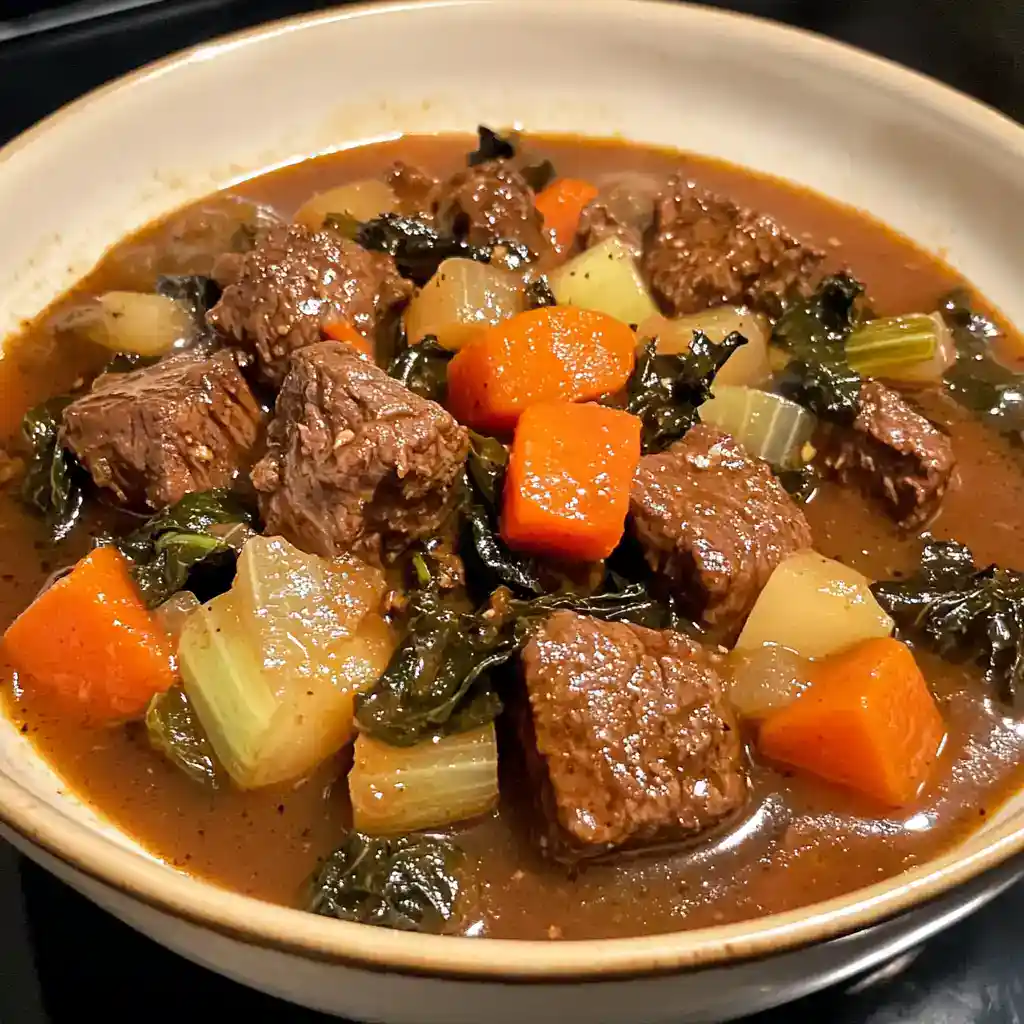
Ingredients
- 1 lb beef stew meat, cubed
- 1 onion, chopped
- 2 carrots, sliced
- 2 celery stalks, chopped
- 2 cloves garlic, minced
- 4 cups beef broth (good quality — the backbone of the whole dish)
- 1 can (14.5 oz) diced tomatoes with juices
- 1 tsp dried thyme
- 1/2 tsp paprika
- Salt and pepper, to taste
- 1 bunch Swiss chard, stems removed and leaves chopped (fresh and vibrant — not yellowing)
- 2 tbsp olive oil
Instructions
- Heat olive oil in a large pot over medium heat until shimmering. Brown beef stew meat in batches — never crowd the pot — until deeply golden on at least one or two sides, about 8-10 minutes total. Let pieces sit undisturbed before turning.
- Add chopped onion, sliced carrots, chopped celery, and minced garlic. Cook until slightly softened, about 4-5 minutes, scraping up all the golden bits from the beef.
- Pour in beef broth and diced tomatoes with their juices. Season generously with thyme, paprika, salt, and pepper — the long simmer mellows everything considerably.
- Bring to a boil, then reduce heat to low. Cover and simmer for 1.5 to 2 hours until beef is completely tender.
- Stir in chopped Swiss chard leaves and simmer covered for 10-15 minutes until chard is fully wilted and integrated into the broth.
- Taste and adjust seasoning — the chard’s mild bitterness often needs a touch more salt to balance. Serve hot.
Nutrition Information (Per Serving):
- Calories: 345
- Carbohydrates: 16g
- Protein: 30g
- Fat: 17g
- Fiber: 4g
- Sodium: 880mg
- Key vitamins/minerals: Vitamin K (300% DV from Swiss chard), Vitamin A (65% DV), Magnesium (25% DV), Iron (22% DV)
- Note: Swiss chard provides one of the highest vitamin K concentrations of any commonly available vegetable — an extraordinary nutritional contribution from an ingredient that also makes the stew taste considerably more complex and satisfying.
Notes:
- Add Swiss chard only after the beef is completely tender — it needs only 10-15 minutes and overcooks quickly
- Brown beef properly in batches — crowding produces gray, steamed pieces that contribute almost nothing to the broth
- Use fresh, vibrant chard — past-its-prime chard can turn slimy rather than silky during the simmer
Storage Tips:
- Refrigerate in an airtight container for up to 4 days — improves overnight as flavors deepen
- Freeze beef broth base without Swiss chard for up to 3 months — add fresh chard when reheating
- Reheat gently on the stovetop over medium-low heat with a splash of broth to restore consistency
Serving Suggestions:
- Serve with crusty bread for soaking up the rich, tomato-enriched broth
- Ladle over creamy polenta for a deeply satisfying Italian-inspired pairing
- Pair with a simple arugula salad dressed with lemon and olive oil for brightness
- A drizzle of good olive oil over each bowl adds richness and a beautiful Mediterranean finish
Mix It Up (Recipe Variations):
- Tomato Paste Depth: Stir a tablespoon of tomato paste in with the vegetables before adding broth for a richer, more concentrated tomato flavor and deeper color throughout
- Cannellini Bean Addition: Add a cup of drained white beans with the Swiss chard for extra plant-based protein and a naturally creamy texture that makes the stew considerably more substantial
- Mediterranean Olive Twist: Add a handful of kalamata olives and a pinch of red pepper flakes with the chard for a briny, slightly spicy depth that pairs beautifully with the earthy greens and rich beef
What Makes This Recipe Special: Adding Swiss chard only in the final 10-15 minutes of a nearly two-hour braise is the timing decision that makes this stew genuinely special — the leaves wilt into something silky and flavorful that integrates completely into the rich broth rather than simply floating on top as an afterthought. The chard’s mild natural bitterness provides exactly the counterpoint the richness of the beef broth and tomatoes needs, creating a balance in the finished bowl that makes this beef and Swiss chard stew taste considerably more sophisticated than its ingredient list and technique would suggest to anyone who hasn’t tasted it.