
Ever wonder why some stew recipes feel genuinely special while others just taste like everything got boiled together in a pot? I spent years making decent beef stew before my neighbor handed me a rutabaga at her garden fence and told me to try it instead of potatoes. I was skeptical — I’d honestly never cooked rutabaga in my life. One pot later, I was completely converted. The slightly sweet, earthy flavor it brings to beef stew is something I now can’t imagine going without. If rutabaga has been a mystery vegetable you keep walking past at the grocery store, this beef and rutabaga stew is the recipe that finally makes it make sense.
Here’s the Thing About This Recipe
What makes this beef and rutabaga stew work is the layering — browning the beef first, building the aromatics second, and letting everything simmer low and slow until the rutabaga becomes tender and the broth turns rich and deeply savory. The rutabaga holds its shape far better than potatoes through a long cook, which means no mushy, disintegrating chunks at the bottom of the pot. I learned the hard way that rushing the simmer produces tough beef and underdeveloped flavor. Give it the full time and the results speak for themselves.
What You’ll Need (And My Shopping Tips)
Good beef stew meat is worth asking your butcher about — well-marbled chuck cut into even cubes braises more consistently than the pre-packaged mixed cuts at the supermarket. I learned this after too many batches with pieces that varied wildly in tenderness (happens more than I’d like to admit).
Rutabaga is the star here and deserves a moment. Rutabaga is a root vegetable that developed as a cross between a turnip and wild cabbage, with a history in Northern European cooking stretching back centuries — it’s slightly sweet, mildly earthy, and absolutely perfect in slow-cooked stews. Look for firm ones with no soft spots, usually found near the turnips in the produce section. Don’t cheap out on the beef broth — a good quality broth is the backbone of the entire dish. I always grab an extra carrot because someone in my family inevitably wants a heartier bowl with more vegetables.
The Step-by-Step (It’s Easier Than You Think!)
Start by heating olive oil in a large, heavy-bottomed pot over medium-high heat until shimmering. Here’s where I used to mess up every single time — I’d throw all the beef in at once, panic about the crowding, and end up with steamed gray meat instead of properly browned, caramelized pieces. Don’t be me. Work in batches if your pot isn’t huge, giving each piece real contact with the hot surface. Brown on all sides until genuinely golden, about 8-10 minutes total — those caramelized edges are building the flavor foundation for everything that follows.
Add chopped onion and minced garlic directly to the pot and sauté until fragrant and softened, about 3-4 minutes, scraping up all those golden brown bits from the bottom. Those bits dissolve into the broth and make it extraordinary. Stir in the diced rutabaga, sliced carrots, and chopped celery and cook for just a few minutes to slightly warm the vegetables before the liquid goes in.
Pour in the beef broth and season with dried thyme, paprika, salt, and pepper. Bring it to a boil, then reduce heat to low, cover, and let it simmer for 1.5 to 2 hours. This is the kind of recipe that rewards a slow weekend afternoon — the longer it goes, the better your beef and rutabaga stew becomes. If you love hearty, slow-simmered comfort food like this, you’d also enjoy this classic beef and vegetable soup for another deeply warming bowl.
If This Happens, Don’t Panic
Beef still tough at the 1.5 hour mark? Give it another 20-30 minutes — toughness means it needs more time, not that something went wrong. Chuck beef becomes genuinely tender only after the collagen fully breaks down, and that takes patience.
Broth tasting thin or flat? Add another pinch of paprika and thyme, taste, and adjust salt. Sometimes the beef and rutabaga stew just needs bolder seasoning than you’d expect — don’t be shy. Rutabaga still firm after the full cook time? Your heat was probably too low — turn it up slightly and check again in 15 minutes. A fork should slide in easily when it’s done.
Ways to Mix It Up
When I’m feeling fancy, I’ll stir a tablespoon of tomato paste in with the onions before adding broth — it deepens the color beautifully and adds a subtle richness that makes people ask what’s different. Around the holidays, I’ll add a handful of frozen peas in the last 10 minutes for color and sweetness that makes the whole pot feel more festive. For a kid-friendly version, reduce the paprika to half a teaspoon and add a diced parsnip alongside the rutabaga — the natural sweetness wins over younger eaters every time. A gluten-free version is already built right into this recipe as written.
What Makes This Recipe Special
Rutabaga has been a staple of cold-weather cooking across Scandinavia, Scotland, and Northern Europe for generations, traditionally used in exactly this kind of slow-cooked, hearty stew where its firm texture and slightly sweet flavor balance richer meats beautifully. Beef stew has deep roots across nearly every culinary tradition in the world, and the combination of root vegetables with braised beef reflects centuries of practical, resourceful cooking that turns simple ingredients into something genuinely nourishing. What sets this version apart is the rutabaga swap — it brings a distinctive character that makes this stew memorable rather than just another beef and vegetable pot.
Questions I Always Get
Can I make this beef and rutabaga stew ahead of time?
Absolutely — this is one of those dishes that tastes significantly better the next day. Make it completely ahead, cool it down, refrigerate overnight, and reheat gently on the stovetop. The broth deepens and the beef gets even more tender.
What if I can’t find rutabaga?
Turnips are the closest substitute and work well, though they’re slightly more bitter. Parsnips give you a sweeter result. Potatoes work in a pinch but won’t hold up as well through a long simmer — they tend to get soft and fall apart.
Can I freeze this homemade stew?
Yes, and it freezes beautifully for up to 3 months. Cool completely, portion into airtight containers, and freeze. Thaw overnight in the fridge and reheat slowly on the stovetop with a splash of broth if it’s thickened up too much.
Is this beef and rutabaga stew beginner-friendly?
Very much so. The technique is simple and the long simmer is forgiving. The only step that truly matters is properly browning the beef at the start — everything else is just layering ingredients and waiting.
How do I store leftover stew?
Refrigerate in an airtight container for up to 4 days. Reheat on the stovetop over medium-low heat — the microwave works but tends to make the beef a bit chewy if you’re not careful about timing.
Can I make this in a slow cooker?
Definitely. Brown the beef in a separate pan first — don’t skip this even for the slow cooker, it makes a real difference — then add everything to the slow cooker and cook on low for 7-8 hours or high for 4-5 hours.
Before You Head to the Kitchen
I couldn’t resist sharing this because beef and rutabaga stew is the kind of recipe that turns an unfamiliar ingredient into a new household staple. The best stew nights are when it’s cold outside, the pot has been simmering for hours, and everyone comes to the table ready for something genuinely warming and substantial.
Print
Beef and Rutabaga Stew
Description
Tender, slow-braised beef with hearty rutabaga, carrots, and celery in a rich, herb-seasoned broth — this beef and rutabaga stew is cold-weather comfort food that rewards patience with every deeply satisfying spoonful.
Prep Time: 20 minutes | Cook Time: 2 hours | Total Time: 2 hours 20 minutes | Servings: 4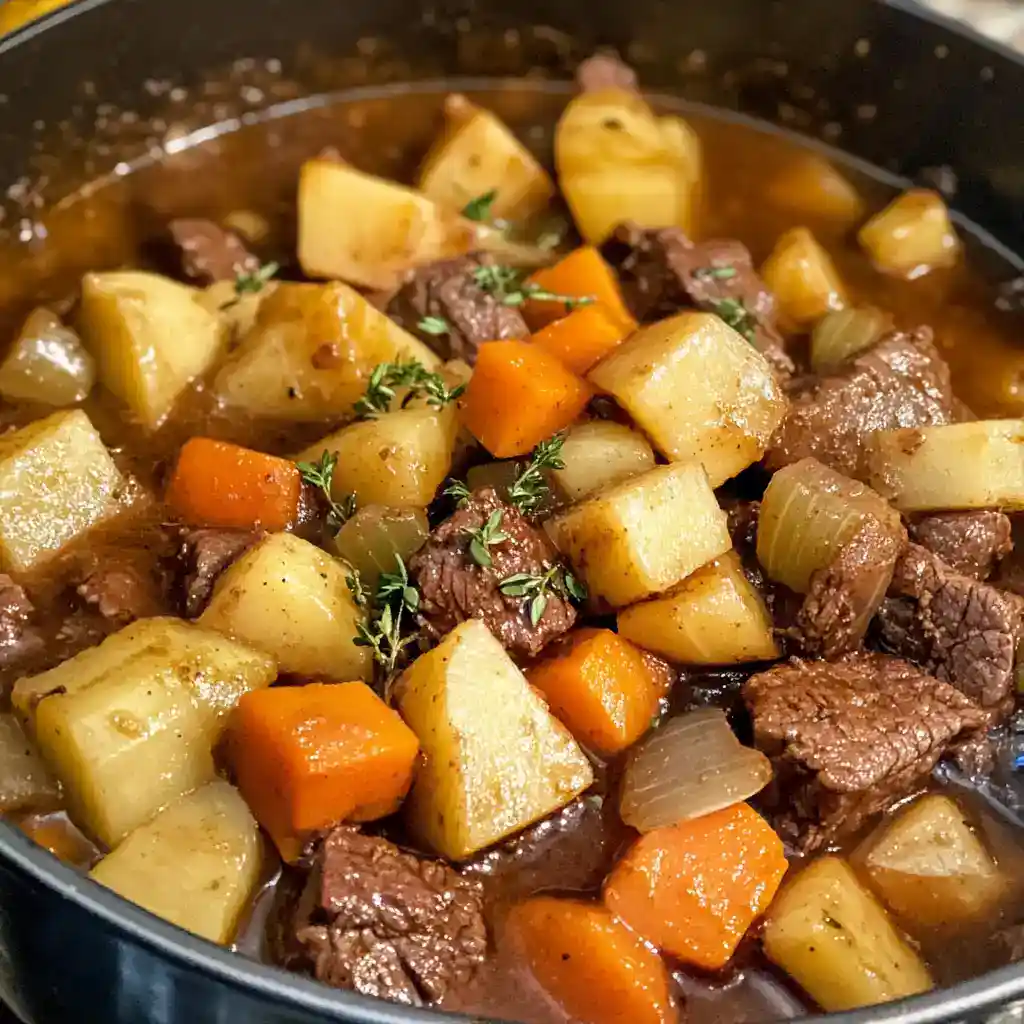
Ingredients
- 1 lb beef stew meat, cubed (well-marbled chuck works best)
- 2 rutabagas, peeled and diced
- 1 onion, chopped
- 2 carrots, sliced
- 2 celery stalks, chopped
- 3 garlic cloves, minced
- 4 cups beef broth (good quality — it’s the backbone of the dish)
- 1 tsp dried thyme
- 1 tsp paprika
- Salt and pepper, to taste
- 2 tbsp olive oil
Instructions
- Heat olive oil in a large heavy-bottomed pot over medium-high heat until shimmering. Brown beef in batches — don’t crowd the pot — until caramelized and golden on all sides, about 8-10 minutes total.
- Add chopped onion and minced garlic. Sauté until softened and fragrant, about 3-4 minutes, scraping up any golden bits from the bottom of the pot.
- Stir in diced rutabaga, sliced carrots, and chopped celery. Cook for a few minutes to slightly warm the vegetables.
- Pour in beef broth and season with dried thyme, paprika, salt, and pepper. Stir to combine.
- Bring to a boil, then reduce heat to low. Cover and simmer for 1.5 to 2 hours until the beef is completely tender and the rutabaga yields easily to a fork.
- Taste and adjust seasoning before serving hot — if you can make it to the table without stealing spoonfuls straight from the pot.
Nutrition Information (Per Serving):
- Calories: 345
- Carbohydrates: 22g
- Protein: 30g
- Fat: 14g
- Fiber: 5g
- Sodium: 870mg
- Key vitamins/minerals: Vitamin C (40% DV from rutabaga), Iron (20% DV), Potassium (18% DV), Zinc (30% DV)
- Note: Rutabaga is an excellent source of vitamin C and fiber, making this stew more nutritionally well-rounded than traditional potato-based versions.
Notes:
- Browning the beef properly is non-negotiable — it builds the entire flavor foundation of the stew
- Rutabaga takes longer to soften than potatoes, so don’t cut pieces too large
- Every pot runs differently — start checking tenderness at the 1.5 hour mark
Storage Tips:
- Refrigerate in an airtight container for up to 4 days — flavor improves overnight
- Freeze in portions for up to 3 months — thaw overnight in the fridge
- Reheat on the stovetop over medium-low with a splash of broth if the stew has thickened too much
Serving Suggestions:
- Serve with crusty bread for soaking up the rich broth
- Ladle over creamy mashed parsnips for an extra root vegetable twist
- Pair with a simple green salad to balance the heartiness
- Serve in deep bowls with a sprinkle of fresh thyme on top for presentation
Mix It Up (Recipe Variations):
- Tomato Paste Version: Stir a tablespoon of tomato paste in with the onions before adding broth for a richer, deeper colored sauce
- Holiday Stew: Add frozen peas and diced parsnip in the last 10 minutes for extra color, sweetness, and a more festive presentation
- Slow Cooker Beef and Rutabaga Stew: Brown beef separately first, then cook everything on low for 7-8 hours or high for 4-5 hours
What Makes This Recipe Special: Rutabaga brings something to beef stew that potatoes simply can’t — a firm texture that holds up through a long braise combined with a subtle sweetness that balances the savory beef broth in a way that makes every spoonful feel complete. Browning the beef properly before building the stew ensures the broth develops real depth rather than tasting like seasoned water, and together those two elements make this a stew worth coming back to every cold season.